
The 2026 Review Conference on the Treaty on the Non-Proliferation of Nuclear Weapons Faces More Challenges Than Ever Before
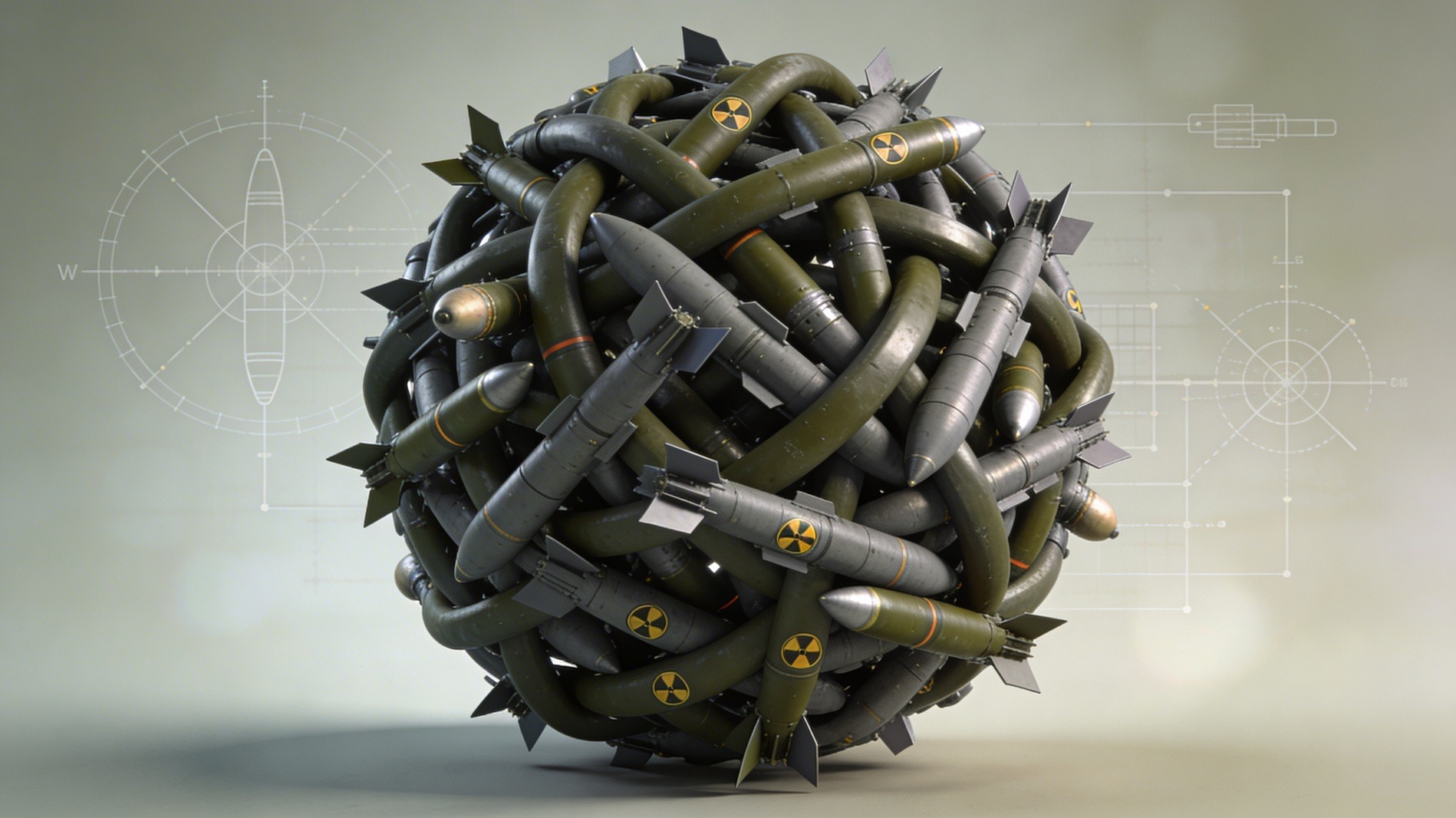
The 11th Review Conference of the Treaty on the Non-Proliferation of Nuclear Weapons (NPT), taking place at the United Nations from 27 April to 22 May 2026, faces the most formidable set of challenges in the treaty’s 56-year history. While the NPT has long been strained by structural inequalities and the failure of nuclear weapon states to fulfil their disarmament obligations under Article VI, a series of recent developments have compounded these long-standing difficulties to a degree that is qualitatively new.
Nuclear weapon states are modernising and, in some cases, expanding their arsenals. Key arms control agreements, including New START, have lapsed with no successors in place. Nuclear sharing arrangements are proliferating across NATO. Threats to resume nuclear testing have resurfaced. And the US-Israeli military campaign against Iran – an NPT member state attacked by a non-signatory and a nuclear weapon state – has struck at the foundations of all three NPT pillars: non- proliferation, disarmament, and the peaceful use of nuclear energy.
These developments have deepened the sense of grievance among non-nuclear weapon states, particularly in the Global South, and eroded the credibility of the treaty’s grand bargain. Middle powers that once bridged the gap between nuclear and non-nuclear states are increasingly aligned with nuclear-allied positions, limiting their capacity to mediate. The prospect of a consensus outcome document is remote.
Looking ahead, the NPT faces several possible trajectories: incremental reform that preserves the treaty in weakened form; withdrawal by disillusioned states, whether nuclear or non-nuclear; deeper fragmentation and new proliferation pressures; or growing momentum behind the Treaty on the Prohibition of Nuclear Weapons as an alternative pathway. The responsibility for preventing further deterioration lies primarily with the nuclear weapon states. Without a credible recommitment to disarmament and a restoration of trust and reciprocity, the NPT risks becoming not merely dysfunctional but irrelevant.
ABOUT THE AUTHOR
Marianne Hanson is Honorary Associate Professor of International Relations at the University of Queensland, Australia, where she teaches and researches in the field of international security, focusing on arms control, disarmament, international organisations and international law. Prior to joining the University of Queensland, she was Stipendiary Lecturer in Politics at Magdalen College, Oxford University. Dr Hanson gained her MPhil and Doctoral degrees at Oxford University. She is an Australian member of the Asia-Pacific Leadership Network.
The opinions articulated above represent the views of the authors and do not necessarily reflect the position of the Asia-Pacific Leadership Network or any of its members. The APLN website is a source of authoritative research and analysis and serves as a platform for debate and discussion among our senior network members, experts and practitioners, as well as the next generation of policymakers, analysts and advocates. Comments and responses can be emailed to apln@apln.network.
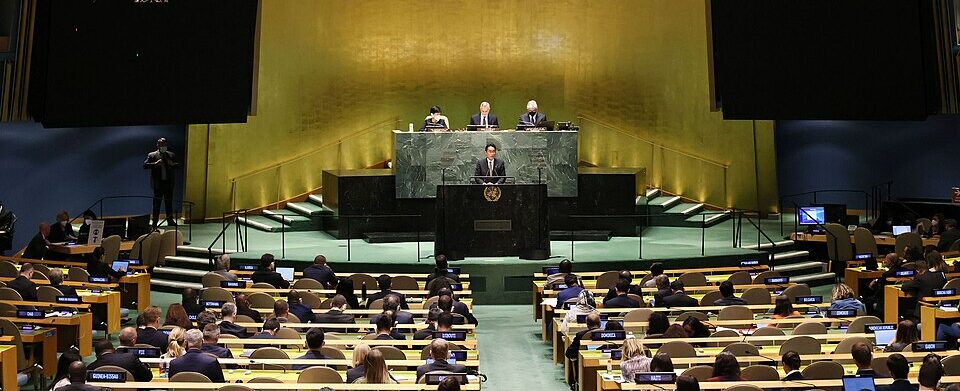
Image: UN building in New York. iStock Images-Riggsy