Why South Korea Needs a Basic Law on the Peaceful Use of Nuclear Energy
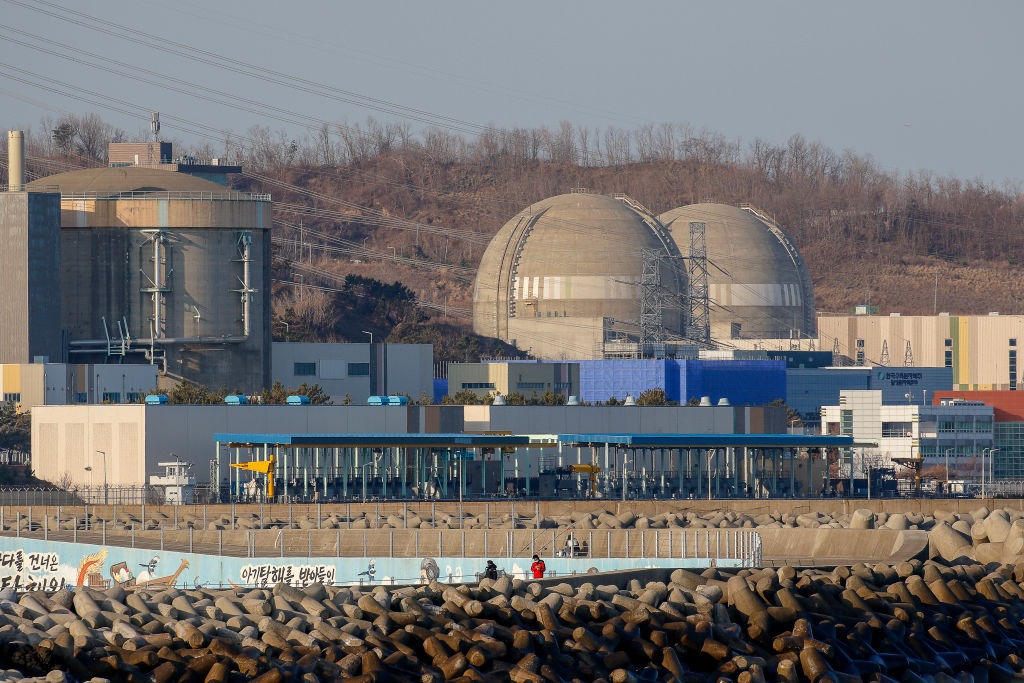
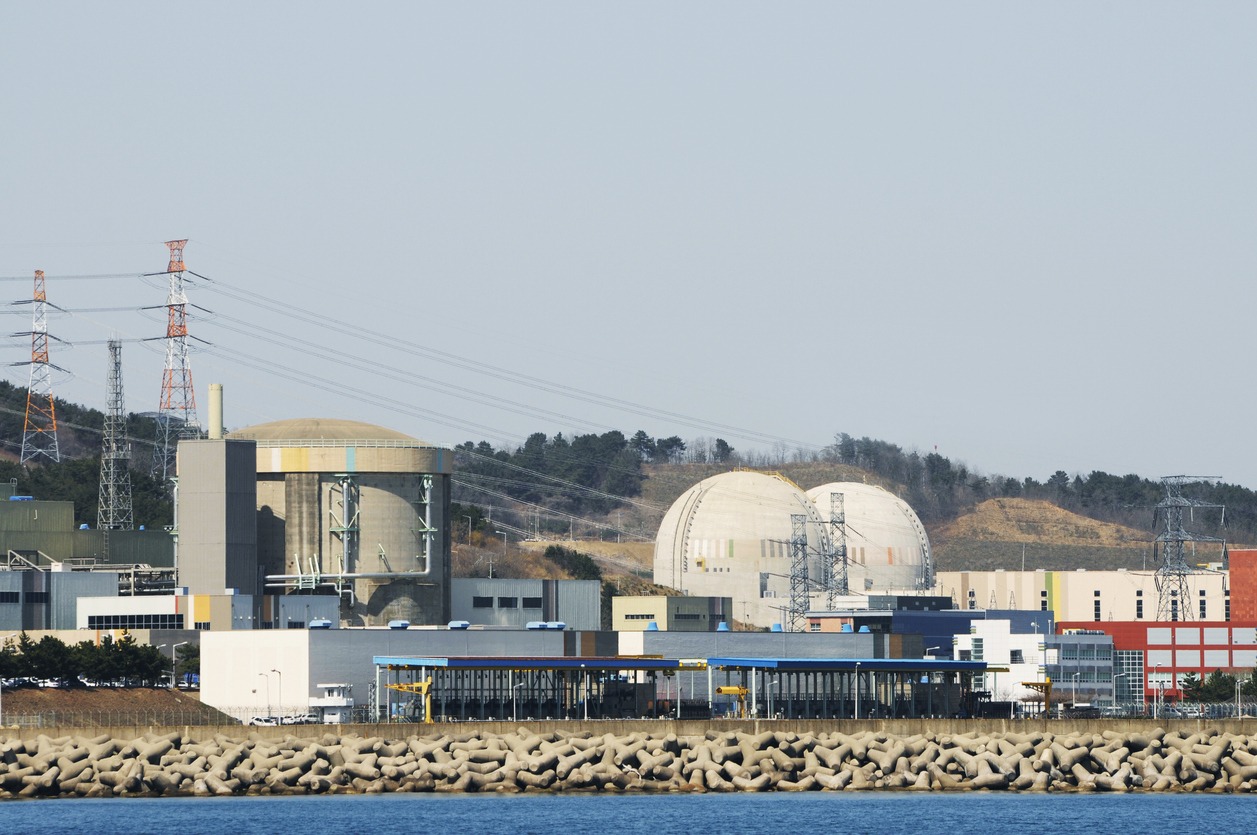
South Korea (the Republic of Korea, ROK) is one of the world’s leading countries in the peaceful use of nuclear energy. It currently operates 26 nuclear power reactors, and nuclear power accounts for approximately 30 percent of the country’s total electricity generation. In terms of nuclear power generation, South Korea ranks among the world’s top five countries, following the United States, China, France, and Russia. South Korea also possesses world-class capabilities in the construction, operation, and export of nuclear power plants. The supply of high-quality, affordable, and stable electricity through nuclear power has contributed significantly to enhancing the international competitiveness of South Korea’s core industries, including semiconductors, automobiles, shipbuilding, steel, and petrochemicals.
Yet South Korea’s nuclear energy sector has a serious structural deficiency. South Korea’s nuclear industry lacks enrichment and reprocessing capabilities, without which it cannot produce or manage its own fuel. The industry therefore cannot support South Korea’s energy security and self-reliance. For South Korea, nuclear remains an unstable energy source vulnerable to shifts in the external geopolitical and geoeconomic environment.
For this reason, it is welcome news that, at the summit between the United States and South Korea in Gyeongju in October 2025, President Donald Trump supported South Korea’s acquisition of enrichment and reprocessing.
According to a joint US-South Korean fact sheet released in November 2025, “Consistent with the bilateral 123 Agreement and subject to U.S. legal requirements, the United States supports the process that will lead to the ROK’s civil uranium enrichment and spent fuel reprocessing for peaceful uses.”
Despite this agreed language, South Korea’s acquisition of enrichment and reprocessing capabilities is expected to be a long and challenging exercise. Within the framework of the ROK-US alliance and the bilateral nuclear cooperation agreement, the United States is expected to exert all available legal and political influence over South Korea’s pursuit of enrichment and reprocessing, to ensure that it proceeds in a manner consistent with South Korea’s status as a non-nuclear weapon state. Certainly, South Korea’s success in acquiring enrichment and reprocessing capabilities will depend on its nuclear non-proliferation credibility, which the United States regards as an essential condition for cooperation on sensitive nuclear technologies.
Affirmations are not enough
Given the US position, Korean governments have repeatedly reaffirmed their strict adherence to nuclear nonproliferation principles. In the US-South Korean Washington Declaration of April 2023, then-President Yoon Suk Yeol “reaffirmed the ROK’s longstanding commitment to its obligations under the Nuclear Nonproliferation Treaty (NPT) as the cornerstone of the global nonproliferation regime as well as to the US-ROK Agreement for Cooperation Concerning Peaceful Uses of Nuclear Energy.” President Lee Jae Myung, at a Cabinet meeting on December 2, 2025, criticised calls in some domestic circles for South Korea’s nuclear armament, describing it as a “realistically impossible option.” He further explained that, if South Korea were to pursue nuclear armament, it would face strong opposition and sanctions from the United States and the international community; that the South Korean economy could not withstand such sanctions; and that no South Korean citizen would want to live like North Koreans. Foreign Minister Cho Hyun also emphasised in an APLN commentary in April 2026 that, for South Korea, upholding the NPT is “not simply a matter of principle, but a logical strategic imperative.”
Despite South Korea’s urgent and industry-driven need for enrichment and reprocessing capabilities, and despite the government’s repeated affirmations of adherence to nuclear non-proliferation principles, the geopolitical environment for such a move remains far from favorable. This is due in particular to North Korea’s growing nuclear arsenal and heightened nuclear threat, as well as the high level of public support within South Korea for an indigenous nuclear weapons capability. Therefore, lest South Korea’s pursuit of enrichment and reprocessing be viewed with suspicion in the face of North Korea’s growing nuclear arsenal and a concomitant increasing support within the country for indigenous nuclear weapons capability, Seoul needs to offer more institutional and legally binding instruments to reinforce its commitment to non-proliferation. To this end, this article proposes the enactment of a Basic Law on the Peaceful Use of Nuclear Energy.
Strengthening the legal framework for peaceful use
South Korea’s current nuclear legal framework rests on two main pillars: the Nuclear Energy Promotion Law and the Nuclear Safety Law. The former focuses on promoting the research, development, production, and utilisation of nuclear energy, while the latter focuses on safety regulation to prevent radiological hazards and ensure public safety. However, these two laws either omit or insufficiently articulate the highest-order principles governing the use of nuclear energy, including peaceful use, with respect to compliance with nuclear non-proliferation obligations, assurance of nuclear transparency, contributions to world peace and the common prosperity of humankind, international cooperation, the securing of sustainable nuclear energy, and the enhancement of energy security.
One could argue that implementing a law on peaceful use is unnecessary. After all, South Korea has faithfully implemented its obligations as a party to the NPT and as a member of various nuclear non-proliferation and nuclear security regimes. Nevertheless, these principles have not been sufficiently codified as supreme norms within South Korea’s domestic nuclear legal system.
If the proposed Basic Law on the Peaceful Use of Nuclear Energy were to codify the above-mentioned principles governing the use of nuclear energy, several advantages could be expected. First, it would clearly declare and guarantee, both domestically and internationally, that South Korea’s use of nuclear energy is confined to peaceful uses. A law is a stronger national commitment than a governmental policy statement or a promise by political leaders. It also assigns legal responsibilities and obligations to relevant actors. Violators would be subject to legal sanctions. If sensitive technologies such as enrichment and reprocessing were pursued under this law and within a framework of legal oversight, external suspicions regarding military diversion and nuclear proliferation would be significantly alleviated.
Meanwhile, in response to North Korea’s threat of nuclear attack, the South Korean government is seeking to introduce nuclear-powered submarines, or SSNs, as part of its effort to strengthen its non-nuclear deterrent. Some observers at home and abroad have argued that South Korea may pursue indigenous enrichment in order to supply nuclear fuel for SSNs. However, the Basic Law on the Peaceful Use of Nuclear Energy would prohibit the diversion of civilian peaceful enrichment facilities for military use in support of SSNs. In fact, the South Korean government has made clear that the introduction of enrichment would be limited to peaceful and civilian purposes, and that low-enriched uranium fuel for SSNs would be supplied by the United States.
Relevant foreign precedents include Japan’s Atomic Energy Basic Act and the United States’ Nuclear Non-Proliferation Act. The former is a basic law that comprehensively addresses the peaceful use, safety, and promotion of nuclear energy, and serves as a useful reference model for the Basic Law on the Peaceful Use of Nuclear Energy proposed here. The latter focuses on nuclear nonproliferation. South Korea, too, faces numerous nuclear nonproliferation policy challenges, and should actively consider enacting a Basic Law on Nonproliferation to address them in a comprehensive and effective manner.
Moving forward responsibly
As South Korea seeks to strengthen its nuclear energy sector by acquiring enrichment and reprocessing it can better showcase itself as a responsible state in the pursuit of peaceful use of nuclear energy and a model in nuclear non-proliferation. Legislation that can legally and institutionally guarantee the credibility of its nuclear non-proliferation commitments can be an effective way of doing so.
About the Author
Dr. JUN Bong-Geun is Professor Emeritus at the Korea National Diplomatic Academy (KNDA) since 2023, after researching and educating for 18 years there. He is also currently President of the Korea Nuclear Policy Society. Professor Jun held several governmental and non-governmental positions: Policy Advisor to the Minister of Unification, Secretary to the President for international security affairs, and professional staffer at KEDO New York headquarters. He was also a visiting fellow at Keio University, the Asia Foundation Center for U.S-Korea Policy, and Geneva Center for Security Studies. His research areas cover the North Korean nuclear issue, inter-Korean relations, Northeast Asian politics, nuclear policy, nuclear energy, and strategic studies. Professor Jun is the author of numerous books and articles. His recent books (in Korean) are The Tragedy of International Politics of the Korean Peninsula (2023), The Thirty Years Nuclear Crisis on the Korean Peninsula (2023), and The Politics of Denuclearization (2020).
The opinions articulated above represent the views of the author and do not necessarily reflect the position of the Asia-Pacific Leadership Network or any of its members. APLN’s website is a source of authoritative research and analysis and serves as a platform for debate and discussion among our senior network members, experts, and practitioners, as well as the next generation of policymakers, analysts, and advocates. Comments and responses can be emailed to apln@apln.network.
Image: iStock/bewrite