China’s SSBN Fleet and Unintended Escalation Risks in the Asia-Pacific Underwater-Nuclear Nexus
Joel Petersson Ivre examines China’s approach to the command and control of its sea-based nuclear forces as the country expands its nuclear-powered ballistic missile submarines (SSBN) fleet and increases its nuclear submarine operations in the Asia-Pacific. He assesses the measures China has in place to prevent accidental or unauthorised nuclear use and considers how the operational demands of a larger SSBN force could affect crisis stability. His analysis highlights the tension between maintaining highly centralised control over nuclear launch authority and providing submarine commanders with sufficient autonomy to respond effectively if communication with China’s political and military leadership is disrupted.
Key findings
- China’s rapidly expanding sea-based nuclear forces are creating new risks of unintended escalation in the Asia-Pacific, as Chinese SSBNs increasingly operate in close proximity to US and allied military assets.
- China’s emphasis on centralised political control, No First Use, and technical safeguards helps reduce the risk of accidental or unauthorised nuclear use, but the operational requirements of a growing SSBN fleet could place increasing pressure on these safeguards.
- The centralisation of nuclear launch authority presents a fundamental dilemma: retaining tight control can reduce the risk of accidental or unauthorised launch, while greater delegation to submarine commanders could strengthen the survivability and credibility of China’s sea-based deterrent but increase escalation risks.
- The crowded and contested maritime geography of the Asia-Pacific magnifies these risks. Chinese SSBN operations in the South China Sea and Yellow Sea increasingly intersect with US and allied anti-submarine warfare activities, while the emergence of North Korean SSBNs could create additional risks of misidentification and inadvertent engagement.
- Emerging technologies could further complicate nuclear command and control. Although China publicly supports keeping humans involved in nuclear-use decisions, the growing integration of artificial intelligence across the Chinese military creates uncertainties about how AI-supported systems could affect decision-making during a crisis.
- Unilateral safeguards alone cannot address the growing underwater-nuclear risks. The paper calls for stronger bilateral and multilateral risk-reduction mechanisms, including improved missile-launch notification arrangements and a regional code of conduct covering nuclear submarines, anti-submarine warfare, and AI-related military deployments.
About the Author
Joel Petersson Ivre is a Senior Policy Fellow at APLN. His research interest lies in Northeast Asian nuclear issues, as well as South Korean and Chinese foreign policy. At APLN, he has researched regional views of the US-China relationship, threat perceptions among states receiving extended deterrence guarantees from the United States, the domestic South Korean nuclear debate, and engagement strategies with North Korea.
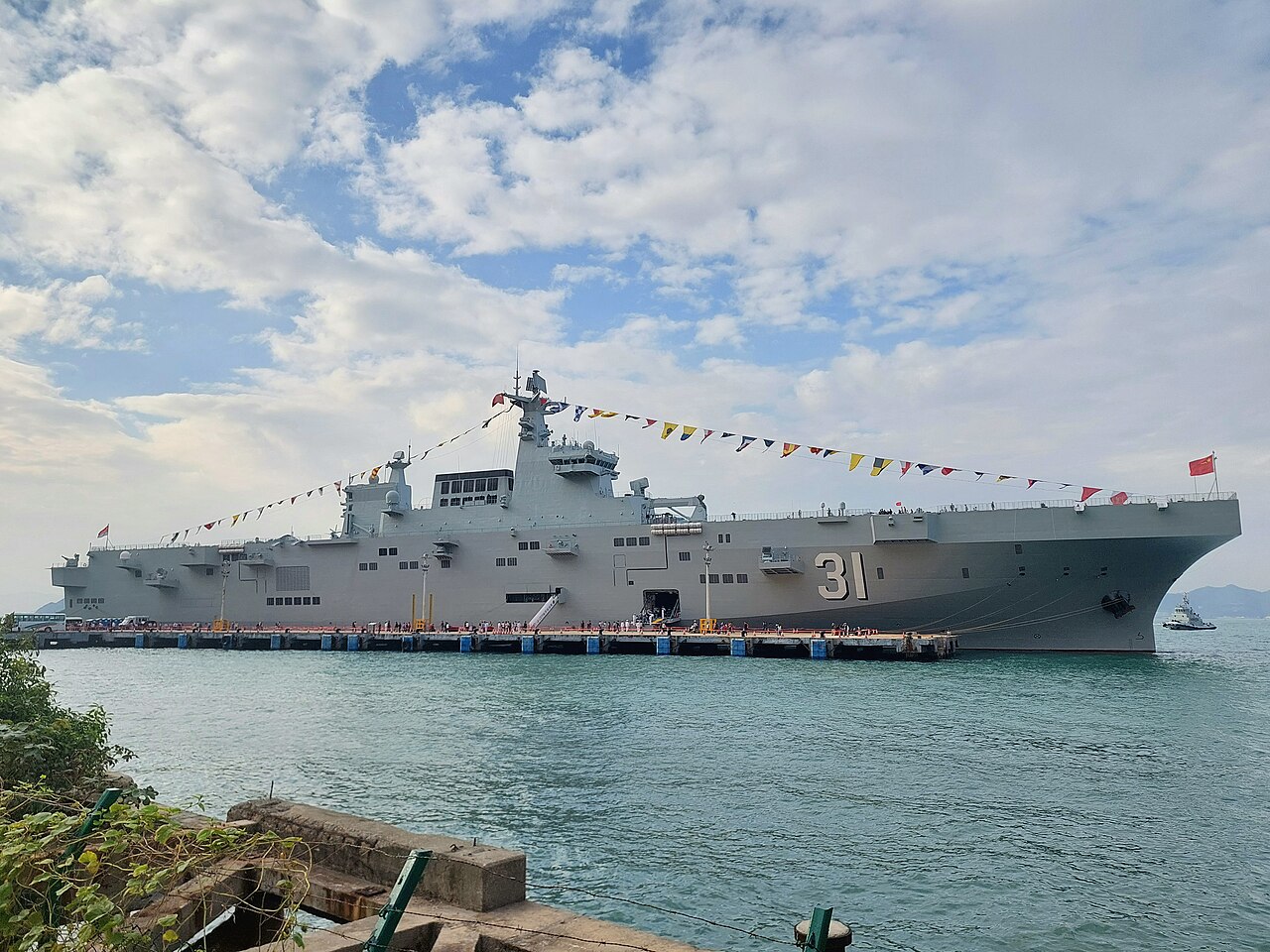
Image: The landing helicopter dock Hainan in Hong Kong in 2024. Wikimedia Commons.