Implications of the Iran War for Security on the Korean Peninsula
RSIS
APLN Vice Chair Chung-in Moon wrote a commentary for the S. Rajaratnam School of International Studies on the security implications of the US-Israel war against Iran on the Korean Peninsula. He suggests that the South Korean government should urgently work to reduce tension, build confidence, and accelerate peaceful coexistence with North Korea.
The United States and Israel launched a surprise attack on Iran named Operation Epic Fury on February 28, 2026. Despite President Donald Trump’s claim of a quick victory, the war continues with no signs of an immediate end. Although the war is taking place far away, it has profound implications for security on the Korean Peninsula – both positive and negative.
The good news is that despite the concerns of some pundits, North Korea is unlikely to be the next target of American military action. The US lacks the capacity to fight two major wars, either simultaneously or in succession, in the Persian Gulf and on the Korean Peninsula. Overstretched military capabilities, the mounting burden of defence costs and waning public support will pose formidable barriers to Trump launching another war targeting North Korea. This is especially the case because the Iran war has not formally ended; the current ceasefire might continue for some time, or hostilities could resume. Cuba might be an easy next target, but North Korea is not.
Even if the US has the capability and the intention, a preemptive strike on North Korea would not be an easy task. Pyongyang possesses nuclear weapons and a wide range of ballistic missiles for retaliation. It has acquired the capability to strike American military bases in Japan and South Korea, either preemptively or in retaliation. Moreover, it has an ICBM capability that puts the US mainland at risk. Its deterrent capabilities would be sufficient to prevent the US from launching a surprise attack on North Korea.
The US and Israel’s military action against Iran was driven in part by the belief that eliminating Iran’s leadership through military strikes could lead to regime change through a mass uprising by the Iranian people. But North Korea is not Iran. As the recent 9th Congress of the Workers’ Party of Korea demonstrated, President Kim Jong Un’s power and leadership are firmly entrenched, and there are no signs of domestic unrest and internal division. If anything, American-style blustering and pressure campaigns would only reinforce Kim’s domestic support and legitimacy.
There’s another factor: Trump has a high degree of distrust of the Iranian leadership, and the US has taken the radical step of launching military strikes during negotiations. On the other hand, Trump has worked to maintain a personal relationship with Kim over the years and has repeatedly emphasised his willingness to reopen negotiations without preconditions, leaving room for dialogue and diplomacy.
As many US government officials and analysts have asserted, Iran did not pose any imminent threat to Israel or America. Yet, the US joined Israel in undertaking military action against Iran, partly because of pressure from Prime Minister Benjamin Netanyahu and the influence of the Israeli Lobby in the US. Many critics saw Israel as one of the prime movers behind the war against Iran. But when it comes to North Korea, no country comparable to Israel has influence over the US government. Also, a powerful lobby inside the US pushing for regime change in North Korea does not exist.
The Lee Jae Myung government in South Korea calls for peaceful co-existence and opposes any unilateral American military action against North Korea. It is inconceivable that the US would launch any offensive military operation against the North without prior consultation and cooperation with the South. The Lee government is thus an effective deterrent to any US military action against North Korea.
Finally, differences in the geopolitical environment also matter. Iran is in a grave geopolitical bind as it faces a powerful security-based alignment comprising Sunni Arab states in the region, Israel and the United States. Although China and Russia are friendly with Iran, they did not provide active military support as they were concerned about US retaliation.
Read the full article here.
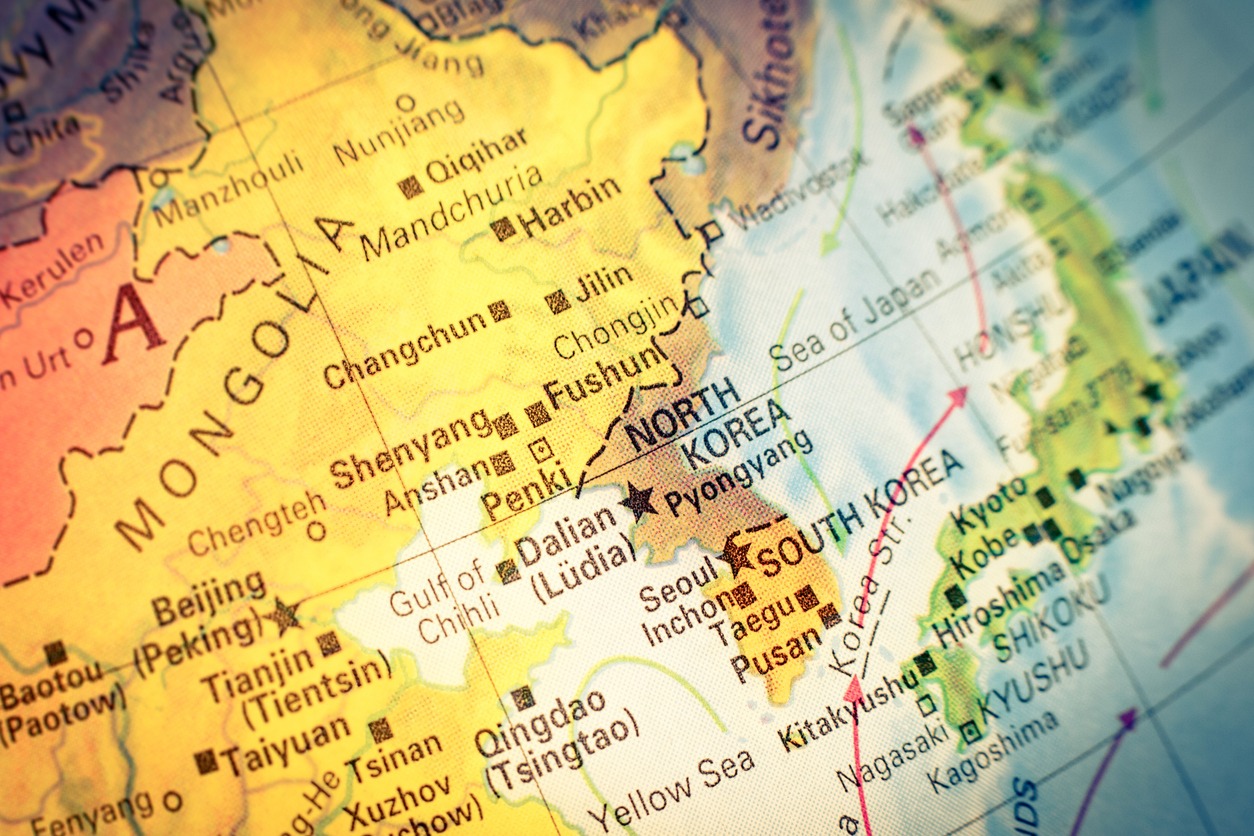
Image: iStock/hansslegers.