
Underwater-Nuclear Nexus in the Asia-Pacific: Nuclear-Powered Submarine Proliferation and Its Consequences
Download the full volume (PDF)
Underwater-Nuclear Nexus in the Asia-Pacific: Nuclear-Powered Submarine Proliferation and Its Consequences, edited by Dongkeun Lee, brings together seven expert papers examining the growing interconnectedness of nuclear and undersea security in the region.
The volume highlights how recent developments, including Australia’s pursuit of SSNs under AUKUS, South Korea’s decision to develop its own SSNs, and China’s expanding nuclear-powered submarine fleet, are reshaping the regional security environment. It argues that these developments warrant closer attention not only to traditional military competition and nuclear deterrence but also to emerging technological, environmental, and nuclear non-proliferation challenges.
The volume examines three broad themes: (1) the development of SSNs ASW capabilities among regional middle-power countries; (2) US–China competition in the undersea domain; and (3) non-traditional and emerging security risks associated with nuclear-powered submarine operations.
The seven papers provide perspectives on Australia’s, South Korea’s, and Japan’s submarine ambitions and ASW capabilities; the evolving capabilities of US and Chinese nuclear-powered submarines; escalation risks associated with China’s sea-based nuclear deterrent; maritime nuclear emergency preparedness; and the implications of quantum technologies for undersea nuclear security.
The volume calls for stronger adherence to nuclear non-proliferation norms, greater investment in personnel and industrial capacity, enhanced regional cooperation on maritime nuclear emergency preparedness, and increased transparency to reduce the risks associated with emerging technologies.
Key findings
The proliferation of nuclear-powered submarines is creating new challenges for nuclear non-proliferation and regional stability. Australia’s and South Korea’s pursuit of SSNs, alongside growing debate in Japan, raises important questions about the legal, technical, financial, and strategic implications of naval nuclear propulsion. Countries pursuing SSNs must demonstrate their commitment to nuclear non-proliferation and ensure responsible stewardship of these capabilities.
Australia, Japan, and South Korea face significant challenges in strengthening their ASW capabilities. Beyond acquiring advanced platforms and technologies, these countries must address operational challenges, workforce shortages, and demographic pressures. Australia’s surface fleet currently faces a significant capability gap in towed-array sonar systems, while Japan and South Korea must prepare for expanding operational responsibilities.
The United States retains an advantage in SSN capabilities, but China is narrowing the gap. US submarines currently maintain advantages in armament, endurance, and fleet size. However, China’s expanding SSN fleet and improving capabilities could increasingly challenge US undersea superiority, highlighting the importance of continued investment in shipbuilding capacity.
China’s expanding SSBN fleet could increase the risks of unintended nuclear escalation. China’s centralised nuclear command-and-control structure faces a growing tension between maintaining strict political control over nuclear weapons and ensuring the survivability of its sea-based nuclear deterrent. Increasingly crowded underwater operating environments and technological advances could further complicate this challenge.
The expansion of nuclear-powered submarine operations could expose gaps in regional maritime nuclear emergency preparedness. Although the likelihood of a nuclear-powered submarine incident remains low, a radiological release in the South China Sea could have transboundary environmental and economic consequences, including disruptions to fisheries and seafood supply chains. Existing ASEAN nuclear emergency preparedness arrangements remain primarily land-focused and require stronger maritime components.
Emerging quantum technologies could introduce new risks to underwater nuclear deterrence. Advances in quantum technologies could undermine submarine stealth and affect the survivability of ballistic missile submarines. Concerns about falling behind in technological competition could also heighten escalation risks, underscoring the importance of transparency, dialogue, and long-term governance arrangements.
Policy recommendations
The volume identifies several priorities for policymakers seeking to reduce risks associated with the growing underwater-nuclear nexus:
- Uphold nuclear non-proliferation norms: Countries pursuing nuclear-powered submarines should provide credible assurances that their naval nuclear propulsion programmes will not contribute to nuclear weapons development.
- Address workforce and industrial capacity challenges: Governments should recognise that technological advancements alone cannot overcome personnel shortages, demographic pressures, and limitations in shipbuilding and operational capacity.
- Enhance ASEAN maritime nuclear emergency preparedness: ASEAN should expand existing radiation monitoring and nuclear emergency response cooperation to address maritime incidents, building on established regional mechanisms.
- Promote cooperation on emerging technologies: The proposed SIREN framework – Strategy, Investigation, Reassurance, Evaluation, and Navigation – offers a potential approach to reducing quantum-related nuclear risks through transparency, confidence-building, and long-term governance.
This work was supported by a generous grant from the Heinrich Böll Stiftung East Asia Office in Seoul (HBS). All views expressed are those of the authors and do not represent the official views of HBS, the Asia-Pacific Leadership Network, or its board, members, or other funders.
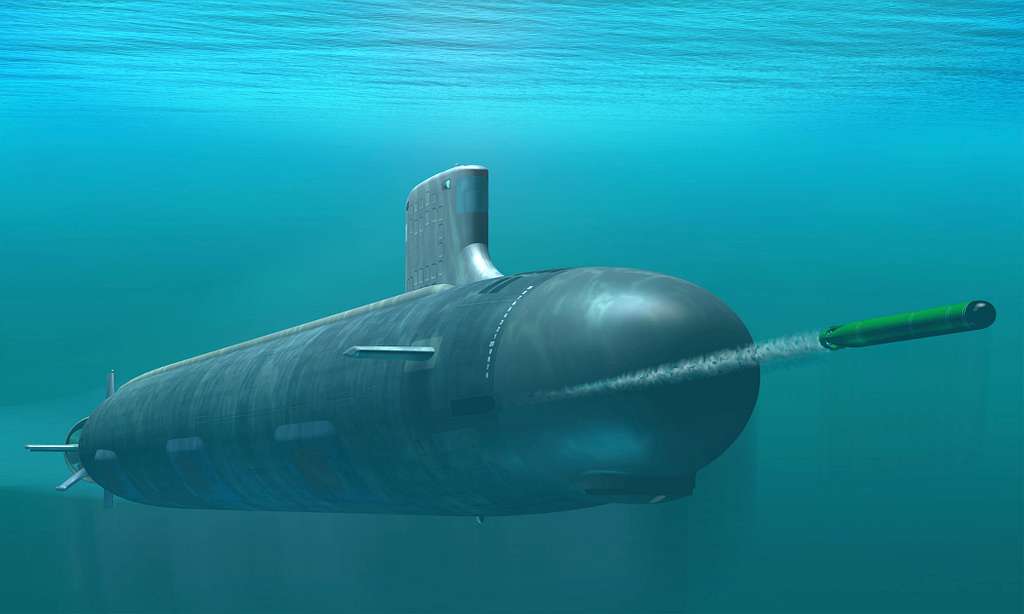
Image: This conceptual drawing shows the new Virginia-class attack submarine now under construction at General Dynamics Electric Boat in Groton, Conn., and Northrop Grumman Newport News Shipbuilding in Newport News, Va. The first ship of this class, USS Virginia (SSN 774) is scheduled to be delivered to the U.S. Navy in 2004. Wikimedia Commons.
