
Managing Strategic Competition and Cooperation in the Asia-Pacific
Download or Print the Full Report
EXECUTIVE SUMMARY
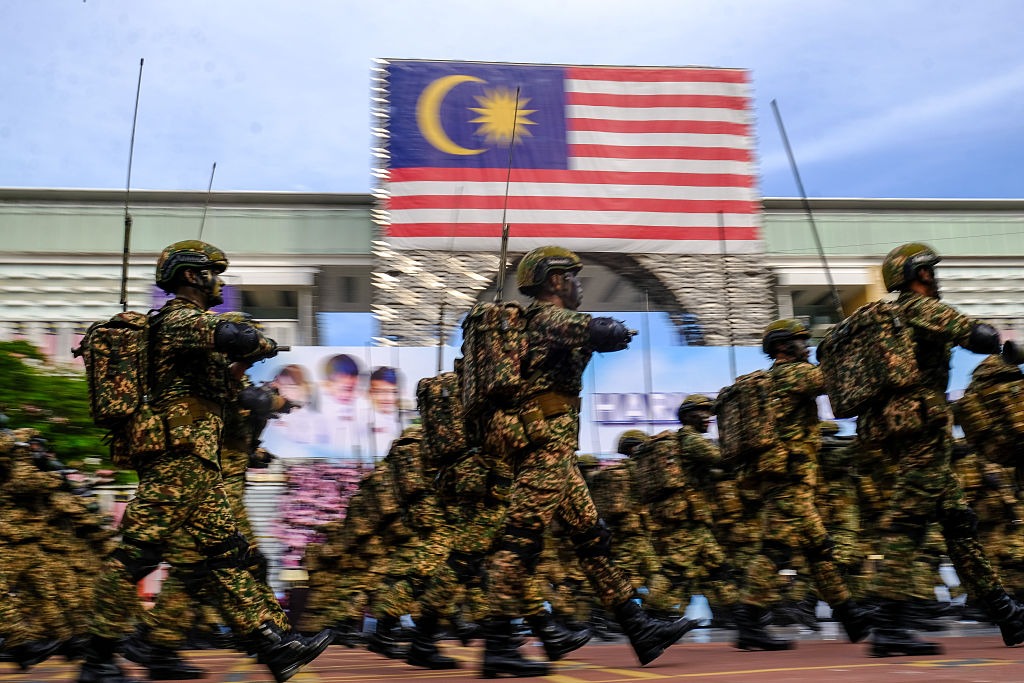
The Asia-Pacific Leadership Network (APLN), with support from the Andrew Carnegie Foundation, convened the fourth Asia Dialogue on China-US Relations in Kuala Lumpur, Malaysia, on 28 and 29 April 2026. Titled “The Shifting Trajectories of Security Cooperation in the Asia-Pacific,” the dialogue convened twenty-five senior experts and former practitioners from across the region, including China and the United States. The participants gathered to examine the evolving strategic policies of Asia-Pacific states amid intensifying geopolitical competition and contestation.
Historically, regional alignment operated on an implicit dual-track consensus, summarised as “China for the economy and the United States for security.” Under this dynamic, China established itself as the leading trading partner for many Asian economies, while the United States maintained an extensive network of formal alliances and security partnerships across the region. However, developments in the second Trump administration in the United States, alongside broader global disruptions, have prompted regional stakeholders in the Asia-Pacific to reassess whether this foundational approach remains sustainable.
A major driver of this reassessment is the US 2025 National Security Strategy (NSS) and its accompanying resource allocation which has increasingly prioritised the Western Hemisphere and the Middle East over the Asia-Pacific – a theatre where American engagement has consequently become distinctly more selective. On the contrary, China has actively signalled interest in expanding its footprint as a regional security provider in the Asia-Pacific. Beijing’s proactive stance aims to reshape regional security dynamics to better reflect its growing power and influence. While these shifting major-power dynamics have fundamentally altered the regional balance, they also present a timely opening for Asia-Pacific middle powers to propose and advance novel models of regional security cooperation.
Against this background, the 2026 Asia Dialogue was structured around four core questions: evaluating how regional power distribution will evolve by 2035; determining how these expectations shape defence partnerships with the United States, China, and regional peers; assessing the alignment between US expectations and actual regional security practices; and examining China’s strategic response to the second Trump administration along with its reception across the Asia-Pacific.
Deliberations on the United States’ Indo-Pacific strategy underscored three key shifts: Washington is prioritising military operational pre-eminence over absolute regional primacy; Washington’s China policy is driven primarily by economic grievances; and the United States is managing regional allies increasingly by putting pressures through burden-sharing demands, reciprocal tariffs, and foreign direct investment expectations. Faced with these pressures, US allies and partners in Southeast Asian and other Global South states are adopting nuanced strategies ranging from hedging to deepening regional security cooperation without entering binding formal alliances. Regional experts also debated whether the narrowed Asia-Pacific-focus of the 2025 NSS, to now primarily concentrate on Taiwan and the first island chain, reflected Washington’s selective engagement, retrenchment, or unpredictability.
The dialogue also discussed China’s efforts to project its security policies across the region. Two Chinese-led minilaterals – BRICS and the SCO – were particularly examined as instruments to promote an “inclusive, non-hegemonic” multipolar order, with the SCO acting as a regional security stabiliser against terrorism and the BRICS as a technical self-help platform for common development and trade. While Beijing views its regional relationships as historically strong and promotes an inclusive “Asian” security framework, continued coercive tactics in the South China Sea, recent aggressive rhetoric toward Japan over Taiwan, and an expanding internal security apparatus continue to fuel scepticism amongst its Asia-Pacific neighbours. Despite these frictions, China’s deep integration into the regional supply chains and its expanded diplomatic dialogues with Southeast Asian states are solidifying its role as an economic powerhouse and an emerging security actor in the Asia-Pacific.
As Southeast Asian states calibrate their alignment in the evolving geopolitical environment, their strategic calculations are expected to be significantly shaped by their projections of future power dynamics between Washington and Beijing. Regional experts noted that in the face of an intensifying major power rivalry and the erosion of traditional security alliances and partnerships, Southeast Asian states are now prioritising survival and stability through non-alignment and multi-alignment. Rather than choosing sides, countries are actively exercising agency by diversifying their defence and economic partnerships with other Asian middle powers like Australia, Japan, and South Korea. The conversation emphasised that Southeast Asian regional planning through 2035 relies on flexible, transactional hedging and multi-faceted statecraft to maintain strategic autonomy within an increasingly complex and multipolar order.
The dialogue also examined an expanding matrix of regional minilaterals in the Asia-Pacific, operating on a spectrum between binding alliances (requiring mutual defence) and flexible alignments (preserving autonomy without high political costs). Contrary to standard US assumptions that middle powers join these arrangements solely to balance against China, the discussions revealed that smaller states leverage flexible cooperation to preserve autonomy, achieve deterrence through denial, and avoid binary geopolitical choices. Smaller regional actors reject hierarchical categorisations of power and instead, use non-binding alignments to maintain strategic distance while retaining the option to escalate commitments if thresholds of the threat are breached. In the contexts of power asymmetry, weaker states exercise agency through delay, coalition-building, or resilience. From this perspective, minilaterals generate strategic friction, preventing major powers from translating material dominance into uncontested political control. The discussions further emphasised that while an evaluation of Asian minilaterals through a “public-goods test” reveals that these groups allow emerging economies to bypass major power-led structures and press for systemic reform, their capacity to rapidly transform global governance remains constrained by diverging national priorities and opaque internal processes.
About the Authors
Dr. Tanvi Kulkarni is a Senior Policy Fellow at APLN.
Hree P. Samudra is a Policy Fellow at the APLN.
Image: Chessboard. Courtesy: Sergei Krestinin, iStock Images.