The CTBT at 30: An Interview with CTBTO Executive Secretary Dr. Robert Floyd
As the Comprehensive Nuclear-Test-Ban Treaty (CTBT) turns 30 this year, Dr. Robert Floyd, Executive Secretary of the CTBTO, speaks with APLN about the Treaty’s practical role and global impact. This interview was conducted by APLN’s Strategic Risk Reduction Fellow Hree P. Samudra and transcribed and edited by APLN’s Senior Policy Fellow Tanvi Kulkarni.
(The interview has been very lightly edited for clarity and readability. The substance and meaning of Executive Secretary Floyd’s remarks have been preserved throughout.)
HREE P. SAMUDRA: The CTBT opened for signature 30 years ago, and yet the Treaty has still not entered into force. It is quite striking that the CTBTO has spent three decades building and running a global verification system for an instrument that is not technically in effect. For readers who know the Treaty by name rather than by function, what does the CTBTO actually do day to day, and what would be lost tomorrow if it were not there?
ROBERT FLOYD: The CTBT, or the Comprehensive Nuclear-Test-Ban Treaty is a straightforward Treaty that bans nuclear weapon test explosions of any magnitude. To ensure compliance, the CTBT relies on a monitoring and verification system to determine if such a test has taken place anywhere, at any time. The International Monitoring System, consisting of 337 worldwide facilities, is a high-tech smart system designed to detect nuclear explosions underground, in the ocean, in the air, or anywhere on Earth. This system gives confidence to all states that the global norm and commitment against nuclear testing is being upheld. By doing that we help create a more secure and safer world for humanity.
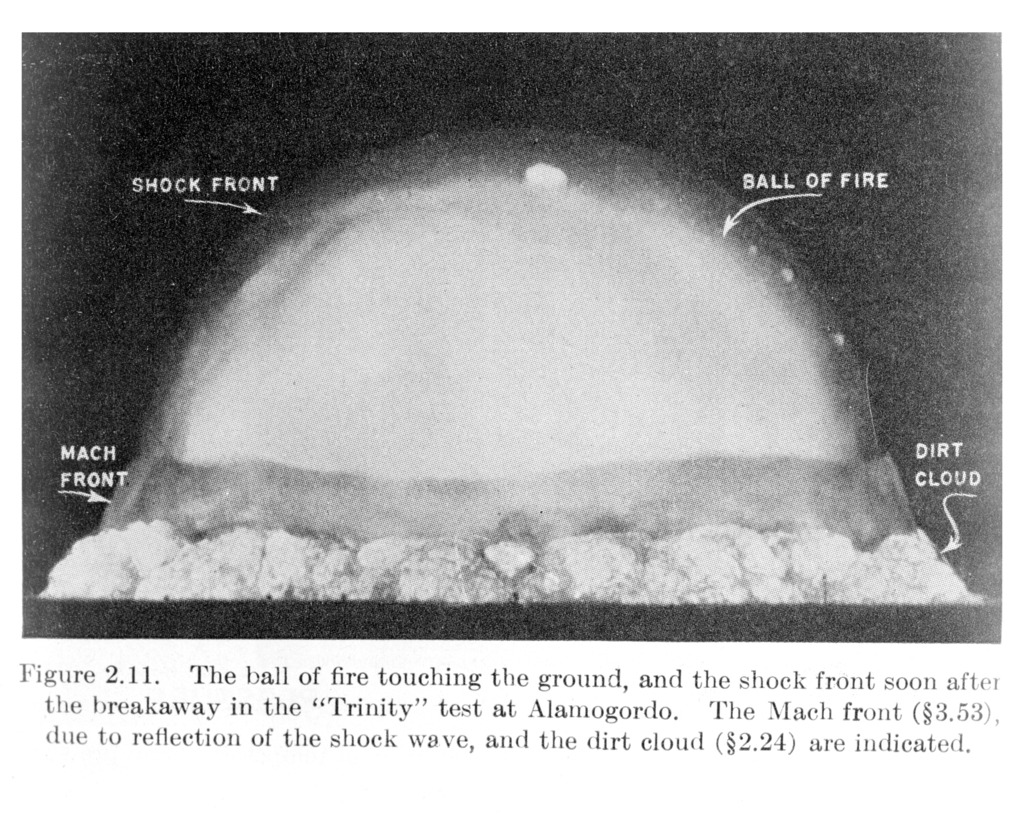
Since the Treaty opened for signature on 24 September 1996, there have been fewer than a dozen tests, compared to over two thousand nuclear explosive tests before that date. This demonstrates a remarkable impact, because states recognise that they can no longer test in secrecy and any nuclear test must occur in full light of day. That is what the CTBTO does and what it gives to the world.
SAMUDRA: You mentioned the importance of political support, and that brings me to the NPT Review Conference which closed in May this year without an agreed outcome, but the successive draft texts retained language on the CTBT, including its entry into force and verification regime. How do you interpret that?
FLOYD: The Nuclear Non-Proliferation Treaty (NPT) is the cornerstone of the global architecture to prevent the spread of nuclear weapons and ultimately move towards nuclear disarmament. The CTBT sits squarely within that architecture. The goal of a test ban is written into the NPT’s preamble, and it was the 1995 NPT Review and Extension Conference that set 1996 as the deadline for completing negotiations on a Comprehensive Nuclear-Test-Ban Treaty. The text opened for signature in September of that year. The CTBT is very much at the heart of the NPT.
The recent NPT Review Conference in April and May concluded without an agreed outcome document. That to me is not a simple measure of the success or the value of the NPT. It is a result of geopolitical circumstances. Built on its three pillars, the NPT still remains an incredibly important structure for global control of nuclear weapons.
The CTBT has consistently received positive support in the outcome documents of past NPT Review Conferences, and we look forward to that continuing. In many respects, the CTBT is already delivering significant benefits – even without formally entering into force – by seeing near-total cessation of nuclear weapon testing. My it long continue that way.
SAMUDRA: Let me bring the conversation more specifically to the Asia-Pacific. Tonga’s ratification of the CTBT in July completed the Treaty’s universalisation across the Pacific region. The Asia-Pacific already carries a large share of the monitoring network, with Australia alone hosting 23 facilities. Beyond ratification and hosting, what else do you wish to see from the Asia-Pacific states?
FLOYD: It was very exciting when Tonga signed and ratified the CTBT in July this year, our most recent addition to the family. It is wonderful to see that every country in the Pacific is a ratifying state. Across the broader Asia-Pacific, nearly every state is a signatory to this Treaty. It is also a region where several nuclear-armed states hold territory. This makes the Asia-Pacific an incredibly important region for the CTBT.
Beyond achieving Treaty universalisation, the top priority is building a strong verification system and establishing all of the planned monitoring stations – most of which are already operational in the Asia-Pacific. It is also about establishing National Data Centres (NDCs) in the signatory states, so that every country, regardless of size, has access to the 36 gigabytes of data collected every day by our monitoring stations around the world. Once received by the International Data Centre, the data is distributed back to the NDCs, where trained local experts can analyse it and conclude for themselves whether the evidence points to a nuclear test explosion.
It is also encouraging that many Asia-Pacific states are using this data for natural disaster management and risk mitigation measures. Eight countries in the Asia-Pacific region – including Indonesia – receive near-real-time data in their tsunami warning centres, enhancing their public alerts and helping to save lives. This is where the CTBTO’s technical cooperation and capacity-building work comes into its own. Equipping states to take part in verification themselves has been a wonderful achievement for the whole region.
SAMUDRA: The regional picture also brings us inevitably to the DPRK, which is the only country to have conducted a declared nuclear test explosion this century. What have those tests demonstrated about the value of the CTBTO’s verification technologies in practice?
FLOYD: The Democratic People’s Republic of Korea is the only state to have conducted declared nuclear weapon explosive tests this century. All six of these tests were detected by the International Monitoring System, including the initial 2006 test, when the network was still incomplete. This provides clear proof that the network, along with the analysis from the International Data Centre and signatory states, works effectively.
Our system is also tested in other ways from time to time. For instance, natural seismic events, such as earthquakes, in some parts of the world trigger speculation on social media claiming a nuclear test has occurred. By examining data from National Data Centres, experts can quickly verify whether such claims are genuine or misinformation or disinformation. There are many instances of this nature. For example, when speculation arose around seismic activity in northern Iran, our data analysis clearly confirmed those were natural seismic events.
SAMUDRA: So how important is the combination of different monitoring technologies in establishing what has taken place?
FLOYD: We have four different data types: seismic data which captures vibrations in the earth’s crust, infrasound data that monitors vibrations in the atmosphere, hydroacoustic data that detects vibrations in the ocean, and radionuclide data which picks up radioisotopes in the atmosphere, particularly certain radioisotopes that come from a nuclear explosion rather than from a nuclear power plant. When the four different types of data are analysed collectively, it is possible for analysts to differentiate a nuclear weapon test explosion from natural earthquakes or conventional blasting, like in mining or quarrying. For instance, a seismic event detected and corroborated by atmospheric infrasound or radionuclide readings can help confirm a nuclear test event.
Our verification system goes beyond the International Monitoring System and the International Data Centre. It has mechanisms for seeking clarification and for sharing information to build confidence. Once the Treaty enters into force, States Parties will also be able to request on-site inspections, in which a team of international experts examines a suspected test site.
SAMUDRA: The verification regime relies on specialised scientific expertise, effective National Data Centres, and continuity between its technical and diplomatic work. As the CTBTO looks to the next generation, what initiatives or partnerships do you think will be most important in strengthening engagement with young people?
FLOYD: I’m so glad you raised this question. Even across the 30-year history of the CTBT, we have seen generational shifts, and these changes will remain essential as the Treaty and its monitoring system carry forward into the future. And so, we are very keen to engage with younger people and the next generation.
At CTBTO, we offer a number of programmes designed to involve young people with CTBT-related issues, and position them as strong candidates for roles within the organisation or in their respective national systems. We have a Mentoring Programme, which is specifically aimed at young women from underrepresented parts of the world, to give them the opportunity to be more successful when they apply for jobs with us or in related areas. We have the Research Fellowship that supports in-depth studies on topics aligned with the CTBT and universalisation of the test ban.
We have a CTBTO youth group, made up of roughly 2000 members – including about 200 from Southeast Asia, Pacific, and Far East. We are planning to relaunch this group soon, with a global steering committee working on the plan. Thank you, Hree, for being a part of the steering committee and for your cooperation and participation in bringing this together to be a more effective vehicle for young people for advocacy and for learning about the Treaty. These collective efforts aim to train, equip and empower the youth to support the mission of the CTBT.
SAMUDRA: I would like to end by looking further ahead. You are currently in your second term at the helm of the CTBTO. If you could bank on one concrete change in the Asia-Pacific between now and the 40th anniversary of the Treaty, what would it be?
FLOYD: I love the way that you are looking to the future. It is hard for me to think in regional bounds because what we actually need is a global response. So, when I think of ten years from now, there are three important things that come to mind. The first is achieving the formal entry into force of the CTBT by securing ratifications from all 44 Annex 2 states, including some in the Asia-Pacific region. The second would be sustaining the non-testing norm over the next decade, so that when the CTBT turns 40, no state has conducted an explosive nuclear weapon test, regardless of the size of the test. And the third would be to strengthen and refine our global monitoring and verification mechanisms, to provide absolute confidence that no one is testing, eliminating any incentives for states to resume nuclear testing. That is a technical challenge, and a matter confidence-building. But itis also a world I would love to see by the time the CTBT turns 40.
About the Contributors
Dr. Robert Floyd is Executive Secretary of the Comprehensive Nuclear-Test-Ban Treaty Organization (CTBTO). He was appointed as Executive Secretary on 1 August 2021 and was reappointed to a second four-year term on 1 August 2025. He is the fourth Executive Secretary of the organisation. Prior to joining CTBTO, Dr Floyd was the Director General of the Australian Safeguards and Non-proliferation Office (ASNO) from 2010 to 2021, where he was responsible for Australia’s implementation of and compliance with various international treaties and conventions, including the Comprehensive Nuclear-Test-Ban Treaty, Nuclear Non-Proliferation Treaty, Convention on the Physical Protection of Nuclear Material (CPPNM) and the Chemical Weapons Convention.
Hree P. Samudra is an Erasmus Mundus Scholar in Security, Intelligence and Strategic Studies (IMSISS), studying across the Universities of Glasgow, Trento, and Charles University. She is a Strategic Risk Reduction Fellow at the Asia-Pacific Leadership Network (APLN) and serves as Global Projects and Regional Engagement Coordinator on the CTBTO Youth Group Steering Committee. Her research examines how emerging technologies are reshaping nuclear verification, strategic stability, and the evidentiary basis for assessing attribution, compliance, and intent in the Indo-Pacific. As the CTBTO Research Fellow, Hree investigated how OSINT, machine learning, and commercial satellite imagery could strengthen multilateral verification without widening technological inequalities or weakening institutional legitimacy. She has also developed an open-source monitoring architecture for nuclear and missile risks on the Korean Peninsula, alongside experimental methods for measuring verification decline and tracing cross-domain escalation pathways. Hree is also a Fellow in the EU-supported HCoC Youth Group on ballistic missile non-proliferation, appointed by the Fondation pour la Recherche Stratégique (FRS). Through the programme, she researches the convergence of civilian space-launch and military ballistic-missile technologies. She also chairs a BASIC–RECNA–HOPe working group examining how evidence from Hiroshima and Nagasaki shapes judgment in nuclear-crisis deliberation.
Tanvi Kulkarni is a Senior Policy Fellow at the Asia-Pacific Leadership Network (APLN). Her research looks at nuclear politics, including nuclear weapon programmes, doctrines, arms control and confidence building measures, with a specialisation on South Asia. She has a PhD in Diplomacy and Disarmament studies from the Jawaharlal Nehru University, New Delhi. Her doctoral thesis examines why states in a nuclear dyad negotiate nuclear confidence-building measures. She has a postgraduate Masters’ degree in defence and strategic studies and an undergraduate degree in political science. Tanvi is also a Visiting Fellow at the Institute of Peace and Conflict Studies, New Delhi and the South Asia Advisor for the International Student/Young Pugwash (ISYP) South Asia Programme. She has previously held a teaching position at the Department of Defence and Strategic Studies at the Pune University, a research fellowship with the South Asia Program at the Stimson Center (2015) and has worked with the Institute of Peace and Conflict Studies and the India-Pakistan Chaophraya Track II Dialogue in New Delhi.
Image: Portrait photo of Dr Robert Floyd, CTBTO Executive Secretary, 2026. Courtesy: The Official CTBTO Photostream, Flickr