Before the Deal: ASEAN Should Test Nuclear Safeguards Readiness
A civil nuclear cooperation agreement can secure technology and financing. It cannot show whether recipient national authorities can produce accurate declarations or fulfil all the access requirements that international safeguards and verification requires. The central non-proliferation challenge for countries of the Association of Southeast Asian Nations (ASEAN) is maintaining trustworthy safeguards capabilities, besides nuclear safety and security, as their nuclear programmes and foreign relationships grow more complex. ASEAN Governments considering a nuclear power programme should therefore test those capabilities too before binding contractual and procurement commitments narrow their room to negotiate.
As interest in nuclear energy grows across Southeast Asia, ASEAN’s nuclear diplomacy should connect its peaceful use commitments with demonstrable national capability to implement safeguards. This commentary proposes that the ASEAN Network of Regulatory Bodies on Atomic Energy (ASEANTOM) should coordinate a voluntary twelve-month safeguards pilot programme for willing member states. This initiative would bring greater understanding of established approaches toward safeguards, allowing national authorities to practise defined procurement practices like verifying declarations, establishing access procedures, examining supplier confidentiality terms, and addressing the identified gaps.
Safeguards belong at the negotiating table
Nuclear diplomacy tends to focus on reactor technology, investment, and fuel supply. These negotiations also settle who holds technical information, how authorities obtain it, and what suppliers allow governments to disclose. If safeguards officials are brought in too late in the procurement process, obstacles surface and complications may arise after contracts and designs are already locked in.
International Atomic Energy Agency (IAEA) safeguards verify states’ non-proliferation undertakings. That is a different task from preventing accidents or protecting against theft and sabotage, so investment in safety and security says little about whether a country can effectively also meet its safeguards reporting and access requirements for inspections. The IAEA infrastructure review reports are useful to some extent in this regard, but they cannot, on their own, establish operational safeguards readiness.
The Treaty on the Non-Proliferation of Nuclear Weapons links peaceful nuclear uses with non-proliferation obligations. A safeguards readiness pilot programme should respect that balance by helping states exercise their peaceful-use rights while implementing their non-proliferation obligations. It should not create a regional veto on nuclear energy or add supplier conditions.
Legal reform must become capability
Recent national legislations give the pilot programme a starting point in ASEAN. For instance, Malaysia’s Atomic Energy Licensing (Amendment) Act 2025 (Act A1779) introduces provisions on nuclear-material accounting, safeguards inspections, and information on nuclear-related activities. The Philippines’ Republic Act No. 12305 establishes an independent regulatory authority and assigns safeguards responsibilities. Vietnam’s Law on Atomic Energy No. 94/2025/QH15 separates regulatory and development functions and provides for safeguards accounting and access arrangements.
These reforms do not establish equivalent capacity or prove regional convergence. The pilot programme would test how each law works in practice.
The December 2025 INIR mission to Vietnam shows why legislation is not enough. The IAEA recommended assessing and strengthening the national safeguards system and improving prospective operators’ understanding of staffing, training, and technical requirements. Its assessment criteria also emphasised safeguards requirements in vendor bid solicitations. These findings support an initiative that helps authorities test implementation capacity while procurement choices remain open.
A warning from the Saudi–US agreement
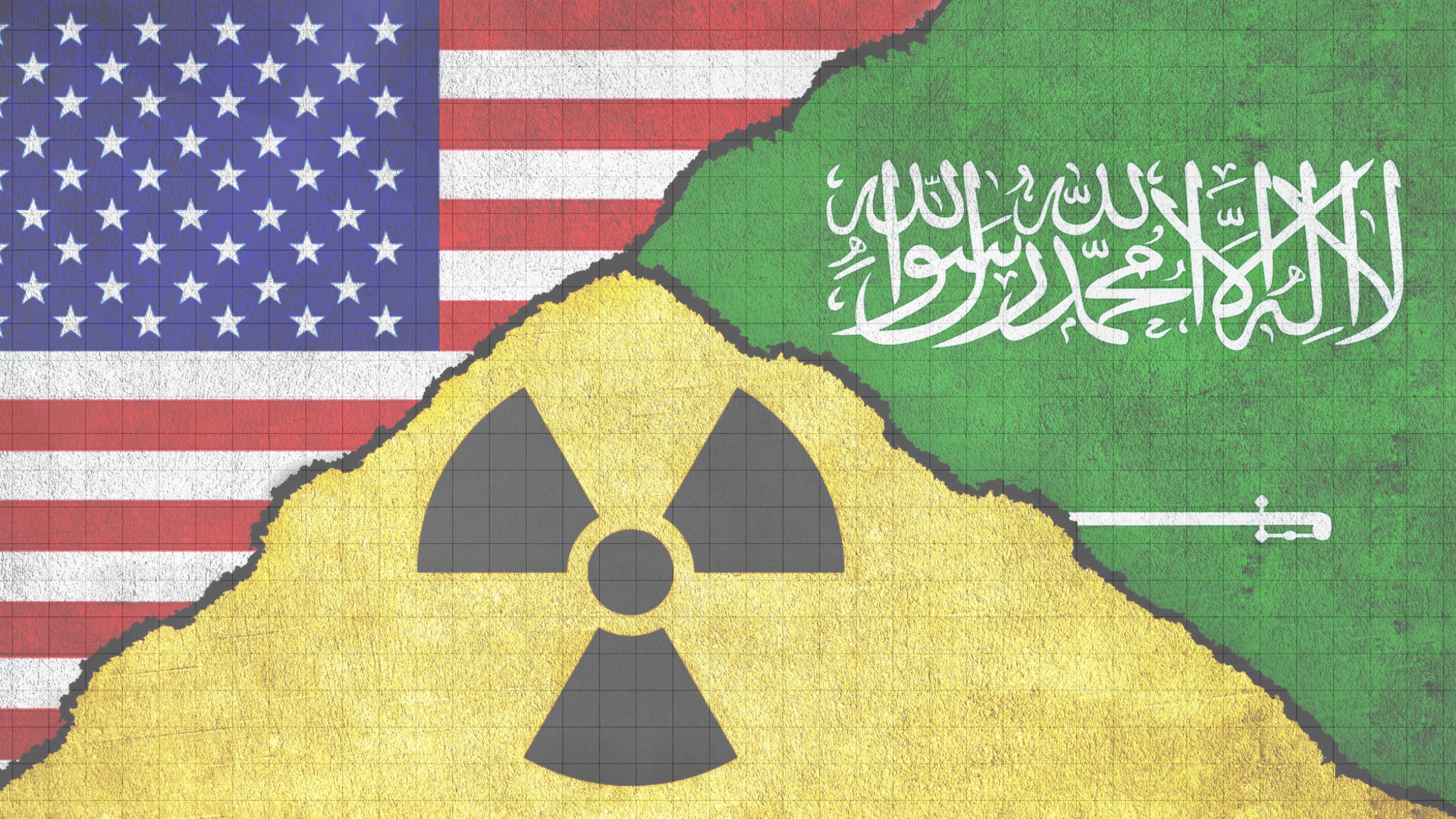
The United States and Saudi Arabia signed a nuclear cooperation agreement on 22 July 2026. The presidential transmittal to Congress, dated 24 August 2026, describes an accompanying bilateral safeguards arrangement and possible transfers of sensitive technology, either for a joint enrichment and conversion study or through explicit written consent. It does not grant an unconditional authorisation to enrich uranium.
While this agreement changes no regional treaty obligations, it offers a specific lesson for ASEAN: supplier terms on sensitive technology can be tied directly to verification commitments. Buyers should examine how the two interact in reactor and fuel-supply talks, distinguish bilateral assurances from IAEA verification, weigh the costs and safeguards demands of any sensitive capability, and apply the same scrutiny to every supplier regardless of nationality.
Build on existing assistance
In taking this idea forward, ASEAN would not be starting from nothing. The IAEA’s Integrated Nuclear Infrastructure Review assesses nineteen infrastructure issues for nuclear power, including safeguards, and its advisory service for safeguards accounting and control systems examines state systems for accounting for and controlling nuclear material.
The proposed pilot programme should build on these services. Participants should first map previous reviews, outstanding recommendations and ongoing assistance. Its added value would be to combine practical exercises with contract scrutiny around a national procurement decision, with regional peers sharing lessons.
Such support must also reflect each country’s legal position. An Additional Protocol complements a safeguards agreement with broader information and access rights, but domestic provisions on a Protocol do not show whether it is in force internationally. Exercises should therefore test the obligations that apply to the participating state. Where a Protocol is not in force, related activities should be explicitly preparatory, alongside encouragement to complete entry into force.
A focused twelve-month pilot
The pilot should begin with one or two volunteer states and expand by consent. Any willing member could host this programme. ASEANTOM would coordinate participation and technical exchange; each government would remain responsible for its own review and corrective action; and the IAEA could be invited to advise.
In the first two months participants should agree on a review template and assign responsibilities. The template should cover legal powers to obtain information, nuclear-material records, declaration procedures, and access arrangements.
In the next four months (months 3-6), the teams work through fictional declarations and simulated information or access requests. They reconcile inventories and transfers, investigate discrepancies, and explain how measurement uncertainty affects their findings. Exercises also test interagency coordination. Agreed criteria should cover accuracy, completeness, response time, and unresolved deficiencies.
From months 7 to12, authorities implement corrective actions with named owners and deadlines. Repeating selected exercises in month twelve tests whether the deficiencies identified by month six have been resolved. Governments record remaining gaps and what they mean for procurement decisions. Success means better performance and completed actions, not more workshops.
A parallel contract exercise would ask whether supplier confidentiality clauses accommodate legally required reporting and access. Participants could review template or redacted contracts and invite supplier comments on confidentiality clauses. Governments should put the same questions to every supplier: can authorities obtain the necessary information, disclose it as required, and meet obligations on fuel transfers and spent fuel? Commercial confidentiality deserves protection, but contracts must allow the state to fulfil its safeguards obligations. IAEA guidance on safeguards in facility design and construction supports raising and addressing these issues early.
Incentives, costs and regional roles
Early participants can identify information and access problems while terms remain negotiable, which may reduce future project delays. Because developers may fear timeline slippage, a narrowly scoped review should run alongside project planning and draw on existing findings. To keep costs manageable, the pilot should use existing staff and training facilities. Donor support could help, provided national authorities retain their independent judgement.
ASEANTOM should support technical cooperation, not take over treaty diplomacy or international verification. National ownership, voluntary participation, fictional datasets, and protected exchanges would allow useful practice without exposing sensitive information. Participants should publish brief summaries of responsibilities and improvements, making clear that the pilot is not IAEA verification.
The Southeast Asia Nuclear Weapon-Free Zone Treaty (SEANWFZ) offers a separate regional framework for reassurance and building mutual confidence. Article 11 of SEANFWZ establishes the protocol for “Report and Exchange of Information” and Article 12 establishes the protocol for a “Request for Clarification”. A complementary national exercise should clarify how foreign ministries coordinate reports under Article 11 and manage clarification requests under Article 12, with technical input from the responsible authorities.
Ultimately, ASEAN’s nuclear diplomacy should secure the capacity to sustain verification alongside access to technology and finance. ASEANTOM’s next step should therefore be to invite interested members to agree a review template and name a first host. The next nuclear deal should be backed by procedures that officials have shown they can effectively implement.
About the Authors
Sabariah Kader Ibrahim is a Section Head at the Centre of Nuclear Excellence (CoNE), Malaysian Nuclear Agency, with over eighteen years of experience in nuclear safety, security, and international capacity building. She is the founder of Women in Nuclear Southeast Asia (WiNSEA), a Robin Copeland Memorial Fellowship recipient, and a former Visiting Fellow at the Stimson Center. She leads an IAEA regional capacity-building project and contributes to the Malaysian Technical Cooperation Programme’s energy transition programme. Her work focuses on strengthening institutional capabilities, advancing nuclear security culture, and supporting regional cooperation in the peaceful uses of nuclear technology.
Nur Dania Adnan is an emerging researcher and recent International Relations graduate from Universiti Sultan Zainal Abidin (UniSZA), with interests spanning nuclear policy, nuclear diplomacy, international security, and Southeast Asian affairs. During her internship at the Malaysian Nuclear Agency, she examined the role of nuclear diplomacy in advancing the peaceful uses of nuclear technology in Southeast Asia and gained exposure to international technical cooperation and policy-related programmes.
The opinions articulated above represent the views of the authors and do not necessarily reflect the position of the Asia-Pacific Leadership Network or any of its members. The APLN website is a source of authoritative research and analysis and serves as a platform for debate and discussion among our senior network members, experts and practitioners, as well as the next generation of policymakers, analysts and advocates. Comments and responses can be emailed to apln@apln.network.
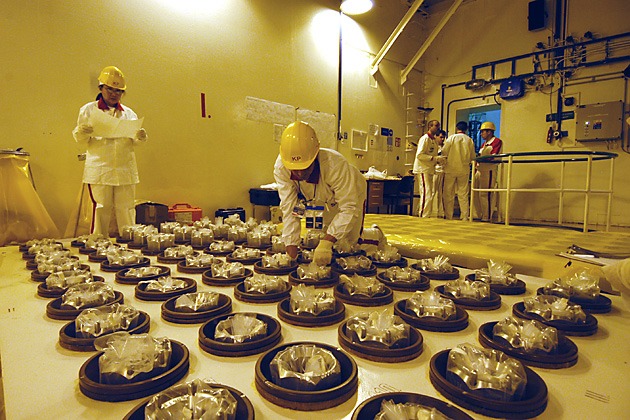
Image: IAEA Safeguard inspectors doing a physical inventory of fuel assemblies stored on a fresh fuel rack. (Mochovce, Nuclear Power Plant, Levice, Slovakia, January 17-21, 2005). Credit: IAEA Imagebank, Flickr.