Nuclear Safeguards Must Be Strengthened, Not Compromised
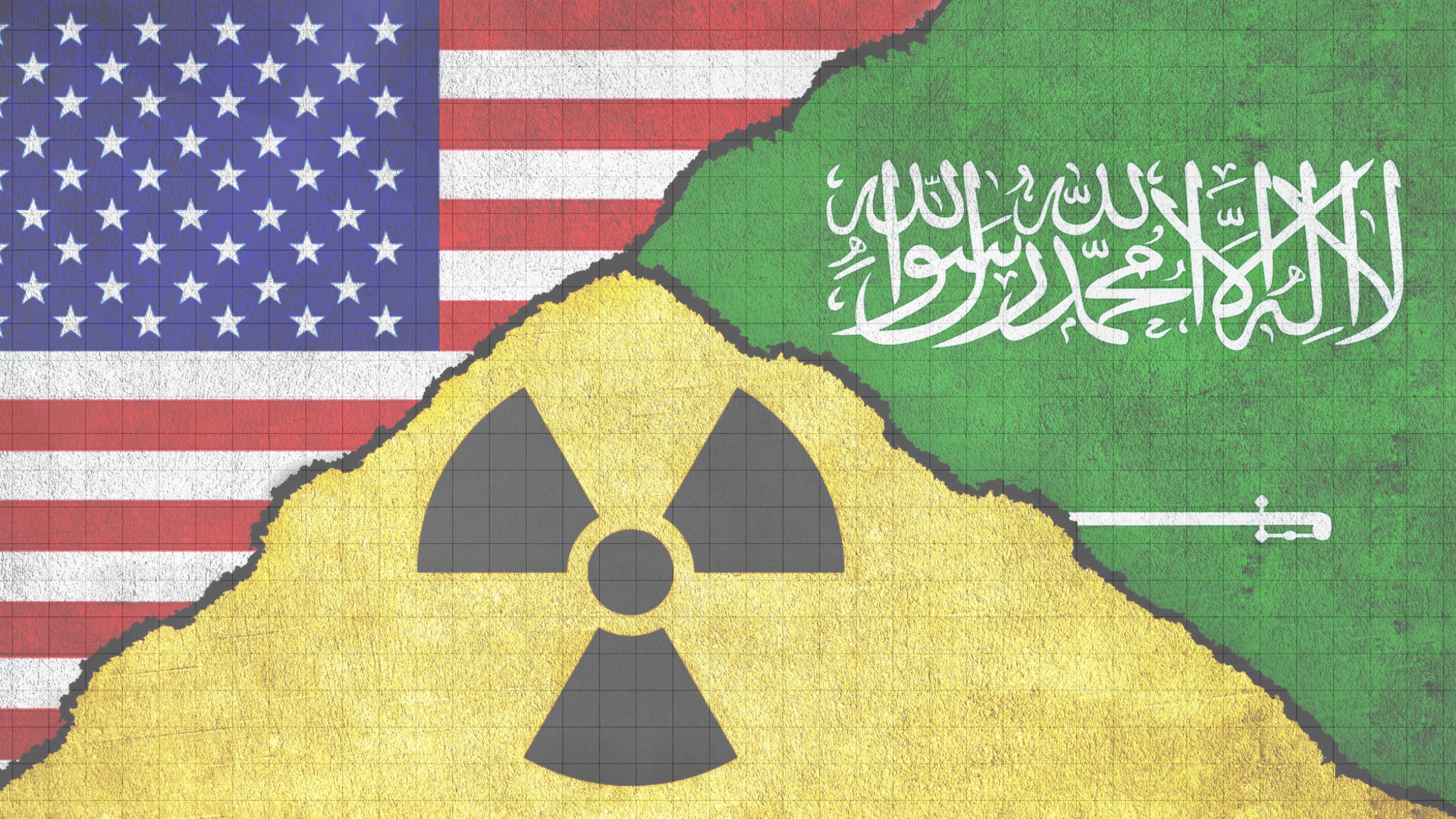
The recently announced United States-Saudi Arabia nuclear cooperation agreement has not yet been made public, but from what is known so far, there are serious grounds for concern. If this agreement proceeds, it will undermine the U.S.’ own “gold standard” for nuclear cooperation agreements as well as efforts to strengthen International Atomic Energy Agency (IAEA) safeguards.
Nuclear safeguards may seem a highly specialized topic for discussion for an op-ed, but the level of support for and adherence to IAEA safeguards has serious real-world consequences. Safeguards, applied by the IAEA to verify peaceful use commitments under the Nuclear Non-Proliferation Treaty (NPT), are an essential element in international action against the spread of nuclear weapons. Also important are controls on nuclear technology that could be used to produce nuclear weapons.
Given the importance of preventing nuclear proliferation, it is extremely disturbing that safeguards do not receive the strongest possible support from every government. This may be partly due to the technical nature of safeguards, which prevents political leaders from fully understanding the potential consequences of their decisions. The U.S.-Saudi agreement is a case in point.
The U.S. gold standard was set in its 2009 agreement with the United Arab Emirates (UAE). This provides that the UAE will not have uranium enrichment facilities within its territory and will accept safeguards including the IAEA’s Additional Protocol. In contrast, the U.S.-Saudi agreement allows enrichment and does not require the Additional Protocol.
On enrichment, it is understood the U.S.-Saudi agreement provides for the two parties to undertake a two-year study into the commercial viability of enrichment in Saudi Arabia. If the conclusion is positive, a joint U.S.-Saudi enrichment program is envisaged. If the conclusion is negative, Saudi Arabia would be free to pursue enrichment independently or with other partners after 10 years.
On safeguards, Saudi Arabia has long refused to accept the Additional Protocol. The Additional Protocol was developed as part of strengthening IAEA safeguards following the discovery of Iraq’s nuclear weapon program in the 1990s. The Protocol increases the IAEA’s ability to detect undeclared nuclear activities, including through wider access to nuclear-related information and locations.
Today, the Additional Protocol represents the NPT safeguards standard, having been accepted by over three-quarters of NPT parties, including 55 of the 65 non-nuclear-weapon states that have nuclear facilities. Korea concluded its Additional Protocol in 2004. The current Protocol holdouts, in addition to Saudi Arabia, include Iran, Egypt and Syria. Iran had applied the Protocol “provisionally,” but stopped after U.S. President Donald Trump renounced the Iran Joint Comprehensive Plan of Action (JCPOA) in 2018.
In parallel with the nuclear cooperation agreement, it is understood that the United States and Saudi Arabia have a bilateral safeguards agreement, not yet public, which proposes “IAEA involvement” in “additional safeguards and verification measures (for) the most proliferation sensitive areas of potential nuclear cooperation”. It is hard to assess this without seeing the details, but rejection of the Additional Protocol raises alarm bells. There is no legitimate reason for any country not to accept the Additional Protocol. A demand for more limited safeguards suggests an intention to keep nuclear options open. It is irresponsible for the United States or any other country to facilitate this.
The current U.S.-Iran war — and other wars in the Middle East and Ukraine — demonstrate that complex political issues cannot be resolved by force, they require diplomacy and political agreement. Where nuclear programs are involved, robust controls over technology together with effective verification will be essential to any political solution. The Iran nuclear issue cannot be resolved in isolation; it must be part of a regional approach. What happens in Saudi Arabia will be decisive for any lasting solution. The concessions given to Saudi Arabia undermine the case for Iran to accept more rigorous verification. Further, the prospect of enrichment in Saudi Arabia will motivate Iran to double down on its own enrichment program.
Historically, the United States has taken a strong position against the spread of nuclear weapons. Washington played a key role in the conclusion of the NPT and the development of the IAEA safeguards system. The United States should be making every effort to universalize the Additional Protocol, especially in regions of tension and high proliferation risk.
Supporters of the nonproliferation regime should be doing everything they can to support the IAEA safeguards system, especially to push for the universalization of the Additional Protocol. There are several countries in the Asia-Pacific region (as well as in the Middle East, Africa and Latin America) that either do not have an Additional Protocol or have signed a Protocol but not yet ratified it. Leading Protocol countries, including the Republic of Korea, should be taking practical actions to encourage and assist these countries to bring an Additional Protocol into force without further delay. In addition, U.S. friends and allies should be encouraging the United States to promote the universalization of the Additional Protocol.
About the Author
John Carlson is a member of the Asia-Pacific Leadership Network (APLN) and an APLN senior associate fellow. He is also a nonresident senior fellow at the Vienna Center for Disarmament and Non Proliferation and a member of the International Advisory Council to the International Luxembourg Forum.
Disclaimer: The opinions articulated above represent the views of the author(s) and do not necessarily reflect the position of the Asia-Pacific Leadership Network or any of its members. APLN’s website is a source of authoritative research and analysis and serves as a platform for debate and discussion among our senior network members, experts, and practitioners, as well as the next generation of policymakers, analysts, and advocates. Comments and responses can be emailed to apln@apln.network.
Image: iStock-Ruma Akter
This article was published in The Korea Times on 5 August 2026. You can find the original article here.