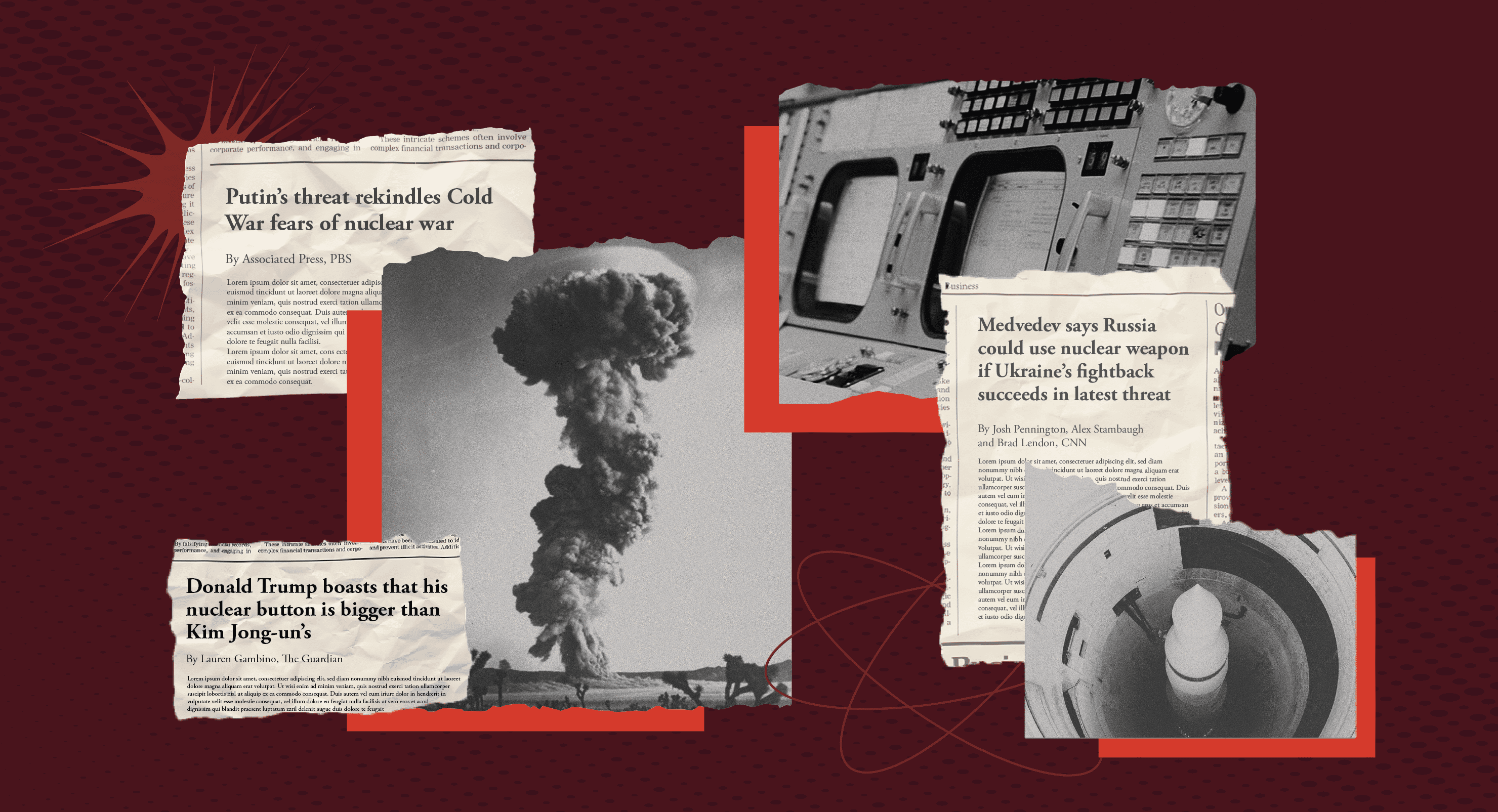
How to Assess Nuclear ‘Threats’ in the Twenty-First Century
George Perkovich argues that ‘nuclear threat’ needs to be defined with more care and nuance to enable decision makers to distinguish serious nuclear threats that demand a countervailing action from nuclear threats that are mere noise or allusion aiming to manipulate nuclear anxiety but do not pose a serious threat of nuclear attack. In short, the less precise our nuclear discourse, the more fear nuclear manipulators can elicit.
This paper is published simultaneously by Carnegie Endowment for International Peace here and by the Nautilus Institute here.
About the Project
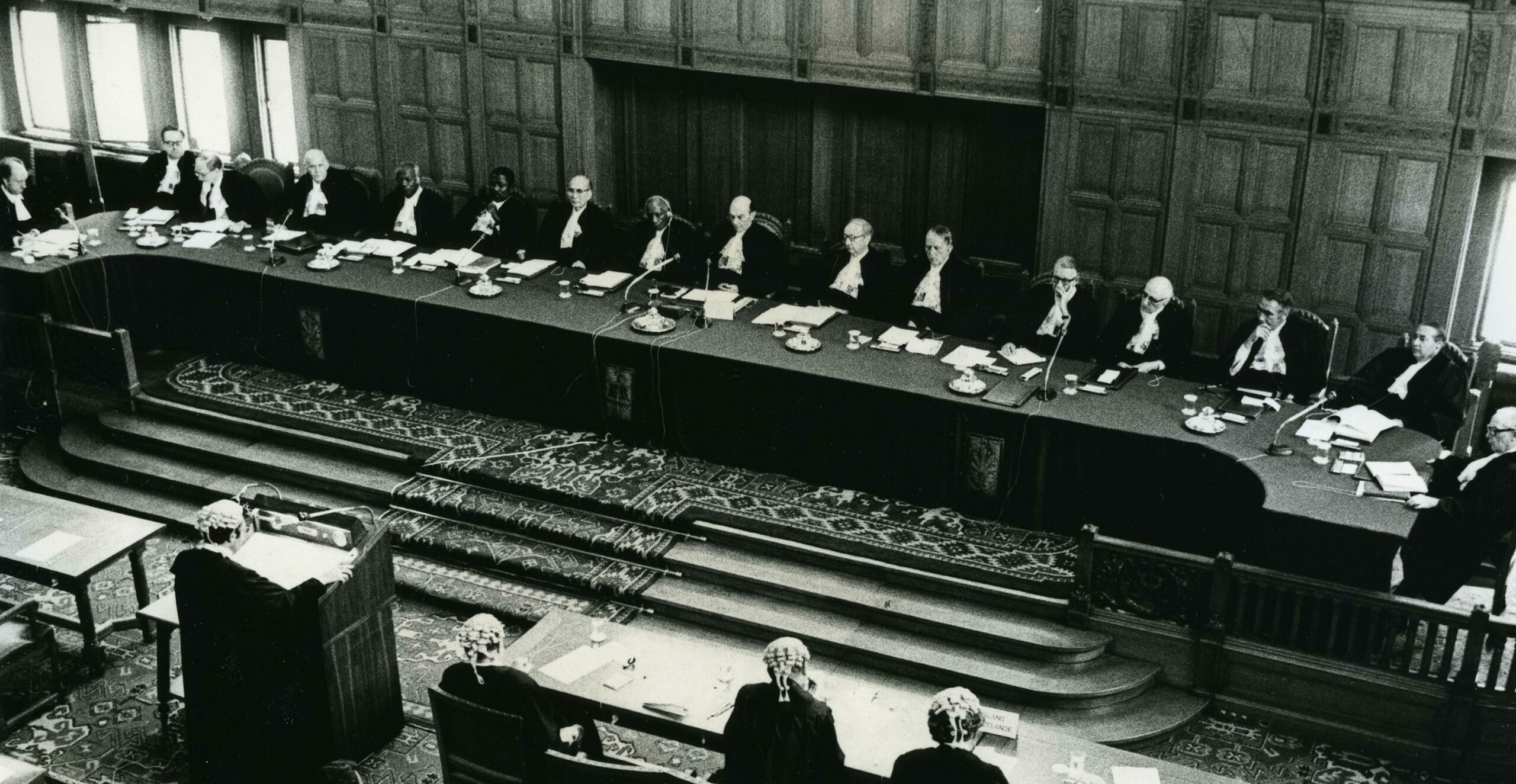
The Assessing Nuclear ‘Threats’ Project: With the support of the Carnegie Corporation of New York, the Nautilus Institute and the Carnegie Endowment’s Nuclear Policy Program have produced four major papers and an Adelphi book on Russia’s war in Ukraine, five India-Pakistan crises or conflicts, and international law and nuclear threat, suggesting that nuclear signaling in the 21st century may be different than during the Cold War.
In collaboration with the Nautilus Institute and the Carnegie Endowment’s Nuclear Policy Program, we are conducting three online seminars with the authors to foster global discussion. Readers are invited to register to attend these events.
Bluff or Death? How to Assess Nuclear “Threats”, Tuesday, February 10, 9–10 AM EST.
- YouTube recording: https://www.youtube.com/watch?v=8TEDEmqJgqU
Nuclear Flashpoint? How Pakistan and India Manage Escalation, February 12, 10-1130am EST, register here
Nuclear Threats and the Limits of International Law, February 23, 7-830pm EST register here
(Note, translation captions are available.)
Acknowledgements
The author thanks the Government of Japan and the Edgerton Foundation—in addition to the Carnegie Corporation of New York—for enabling the research and writing of this paper, Sharon Weiner for her astute guidance, and the following individuals for their invaluable critiques and constructive suggestions: Cara Wilson, John Warden, Pranay Vaddi, Todd Sechser, Austin Long, Helena Jordheim, Peter Hayes, Matt Fuhrmann, Paul Davis, and James Acton. For the graphics and editorial guidance, thanks to Jocelyn Soly, Amanda Branom, and Alana Brase. For orchestrating the project, thanks to Steve Freedkin, Nautilus Institute.
The Nautilus Institute, the Carnegie Endowment for International Peace, and the Asia-Pacific Leadership Network thank the Carnegie Corporation of New York for its support of this project and its ongoing support of public-interest work to prevent nuclear conflict.
About the Author
George Perkovich is the Japan Chair for a World Without Nuclear Weapons and a senior fellow in the Carnegie Endowment for International Peace’s Nuclear Policy Program.
He is the author of the award-winning history, India’s Nuclear Bomb, and the forthcoming Adelphi book, Nuclear Weapons in the Ukraine War, and has served on numerous interna- tional and U.S. panels to address challenges of nuclear deterrence, nonproliferation, and disarmament.
Disclaimer: The opinions articulated above represent the views of the author(s) and do not necessarily reflect the position of the Asia Pacific Leadership Network or any of its members. The APLN’s website is a source of authoritative research and analysis and serves as a platform for debate and discussion among our senior network members, experts and practitioners, as well as the next generation of policymakers, analysts and advocates. Comments and responses can be emailed to apln@apln.network.
Image: Amanda Branom with elements from iStock.