The UK's Approach to the South China Sea
This is the fifth chapter of the edited volume External Stakeholders in the South China Sea.
Download the full volume (PDF)
Scott Edwards investigates the UK’s position on the South China Sea disputes. His findings suggest that similar to France and Germany (see chapters 3 and 4), the UK’s assessment of escalation risks in the region is quite pessimistic. Edwards also discusses how the UK has increased its diplomatic and military presence in the South China Sea to help avert escalation. Meanwhile, he highlights the UK’s contribution to the development of maritime domain awareness (MDA), which is crucial for ASEAN countries given their limited resources and the complex maritime geography of the South China Sea.
Policy recommendations
The UK should develop areas where it can support ASEAN’s maritime resilience – including through fostering greater policy coherence, connectivity and networking, and functional capacity-building – in a way that complements what other dialogue partners are doing. The goal should be for ASEAN to create a more unified understanding (and policy) with regards to its oceans through effective consensus-building, and an ultimately a stronger collective basis for preventing escalation with China (even if that comes about gradually through consensus-building on less sensitive issues).
The UK is well-placed to support the further involvement of likeminded states who currently have little naval engagement with the region. One example of this is the ROK, especially through structures such as the regular deployment of the CSG which sees multinational support forces and exercises.
Middle-power countries should focus on cohering their messaging in order to avoid misunderstandings in the region. Indeed, messaging has not kept pace with these activities, and it is not always clear what states are attempting to achieve with increasing collective efforts. The UK has already moved to a more explicit form of messaging which recognises and condemns China’s aggressive activities when they occur. The focus on UNCLOS and its place in international order is an important step, but middle-power countries should amplify collective defence activities that contribute to common goods.
Maritime Domain Awareness (MDA) could be diversified further to incorporate more like-minded partners. The Five Eyes (FVEY) intelligence network, for example, has some focus on the Indo-Pacific in their MDA Programme, but this is an exclusive Anglosphere club – incorporating only the UK, US, Australia, New Zealand, and Canada. MDA coordination regarding capacity building could be strengthened. This is particularly the case when ASEAN, its member states, and their agencies have limited absorptive capacities and limited abilities to engage.
The and its partners should pool collective resources and deepen sharing of expertise and experience. This sharing could occur in both Track 1 and Track 1.5 settings. While each state has variations in interests and prioritisations, this should be increasingly viable. There is an over-arching common conceptualisation of maritime order and its underpinnings between many middle-power states. Complementarity would make the pooling and streamlining of resources and coordination a more efficient way of delivering capacity and responding to evolving challenges.
This work was supported by a generous grant from the Heinrich Böll Stiftung East Asia Office in Seoul (HBS). All views expressed are those of the authors and do not represent the official views of HBS, the Asia-Pacific Leadership Network, or its board, members, or other funders.
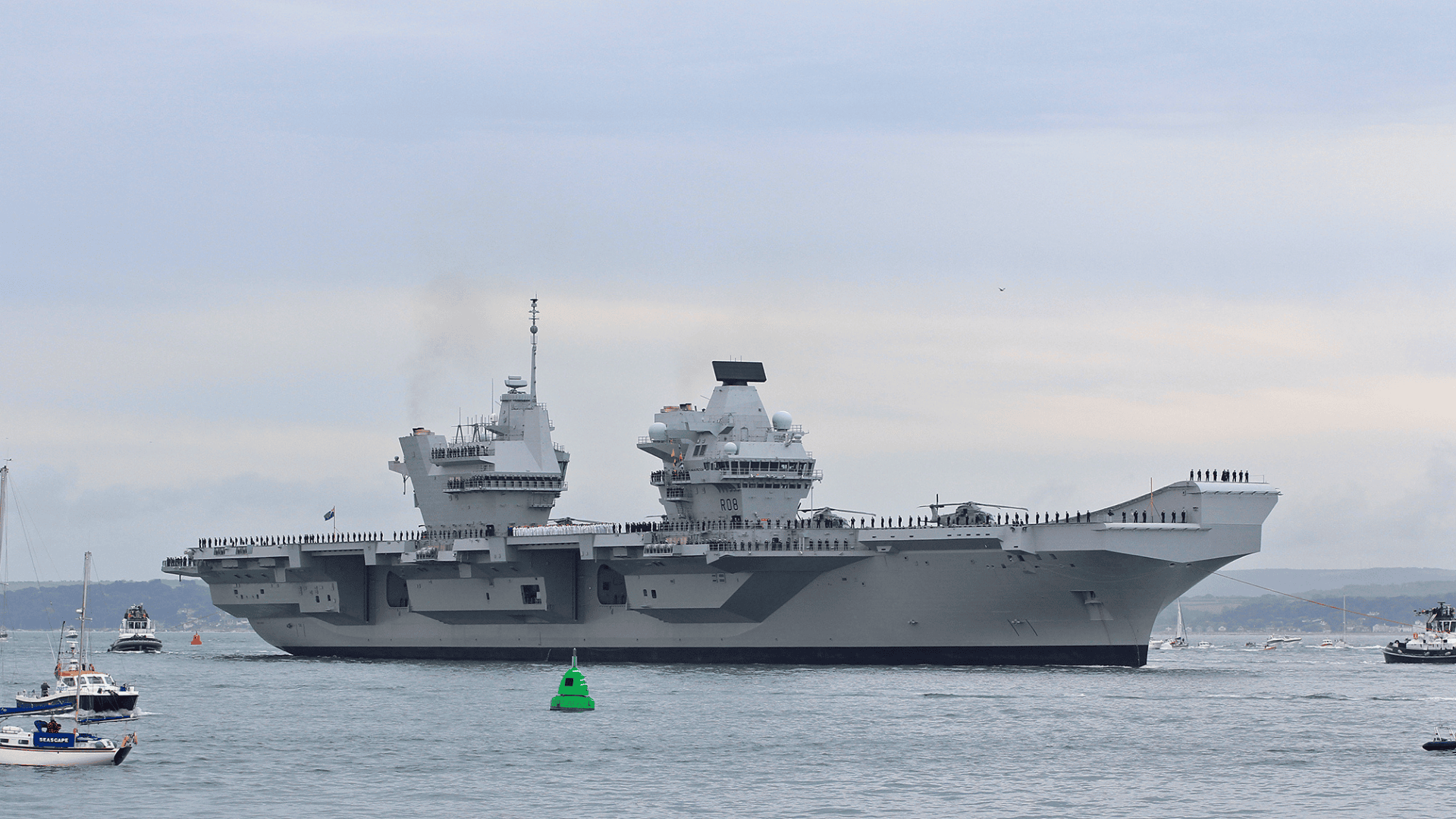
Image: HMS Queen Elizabeth (Wikimedia Commons)