
South Korea and the South China Sea: Paradox of a crucial maritime player
This is the first chapter of the edited volume External Stakeholders in the South China Sea.
Download the full volume (PDF)
Dongkeun Lee finds argues that despite South Korea’s heavy reliance on maritime trade traversing the South China Sea, its assessment of escalation risks in the region remains quite limited, and Seoul seeks to avoid involvement in the disputes. Moreover, although some diplomatic manoeuvres were initiated during the Yoon Suk Yeol administration, South Korea has undertaken virtually no military activities in the South China Sea compared to other countries.
Policy recommendations
Increase its naval presence in the South China Sea. China is investing heavily in expanding and enhancing its naval capabilities; and despite continued interest and increased naval presence by countries supporting freedom of navigation, China may ultimately be able to outmatch the overall sea power balance. In such a scenario, China might simply ignore these countries’ deployments and continue to assert its excessive maritime claims. Despite substantial domestic constraints, strengthening the ROK presence in the South China Sea could help prevent this outcome, and contribute to a regional balance of power in favour of supporting freedom of navigation.
The ROK should make better use of existing operations. Potential partners could include Australia, Japan, France, Germany, and the UK, all of which regularly deploy warships to the South China Sea. Such an approach could minimise direct confrontation with China, as South Korea would not be adding new deployments explicitly intended to safeguard freedom of navigation. Participating in multilateral exercises and conducting maritime patrols in the South China Sea should be considered a long-term objective of South Korea’s involvement in the regional dispute, given that freedom of navigation in this area is not merely an economic issue for the ROK.
The ROK should transfer retired warships to Southeast Asian countries. The ROK has already donated four Pohang-class patrol combat corvettes to Southeast Asian states, including the Philippines, which is directly involved in maritime disputes in the South China Sea. Transfers of retired warships can influence the South China Sea disputes by contributing to the recipient state’s maritime capabilities, thereby shifting the regional balance of power. Accordingly, the ROK should carefully consider the destination of future donations to ensure they support deterrence and stability in the region. A similar logic applies to the ROK’s naval exports more broadly, given that the country has become one of the world’s leading arms exporters.
This work was supported by a generous grant from the Heinrich Böll Stiftung East Asia Office in Seoul (HBS). All views expressed are those of the authors and do not represent the official views of HBS, the Asia-Pacific Leadership Network, or its board, members, or other funders.
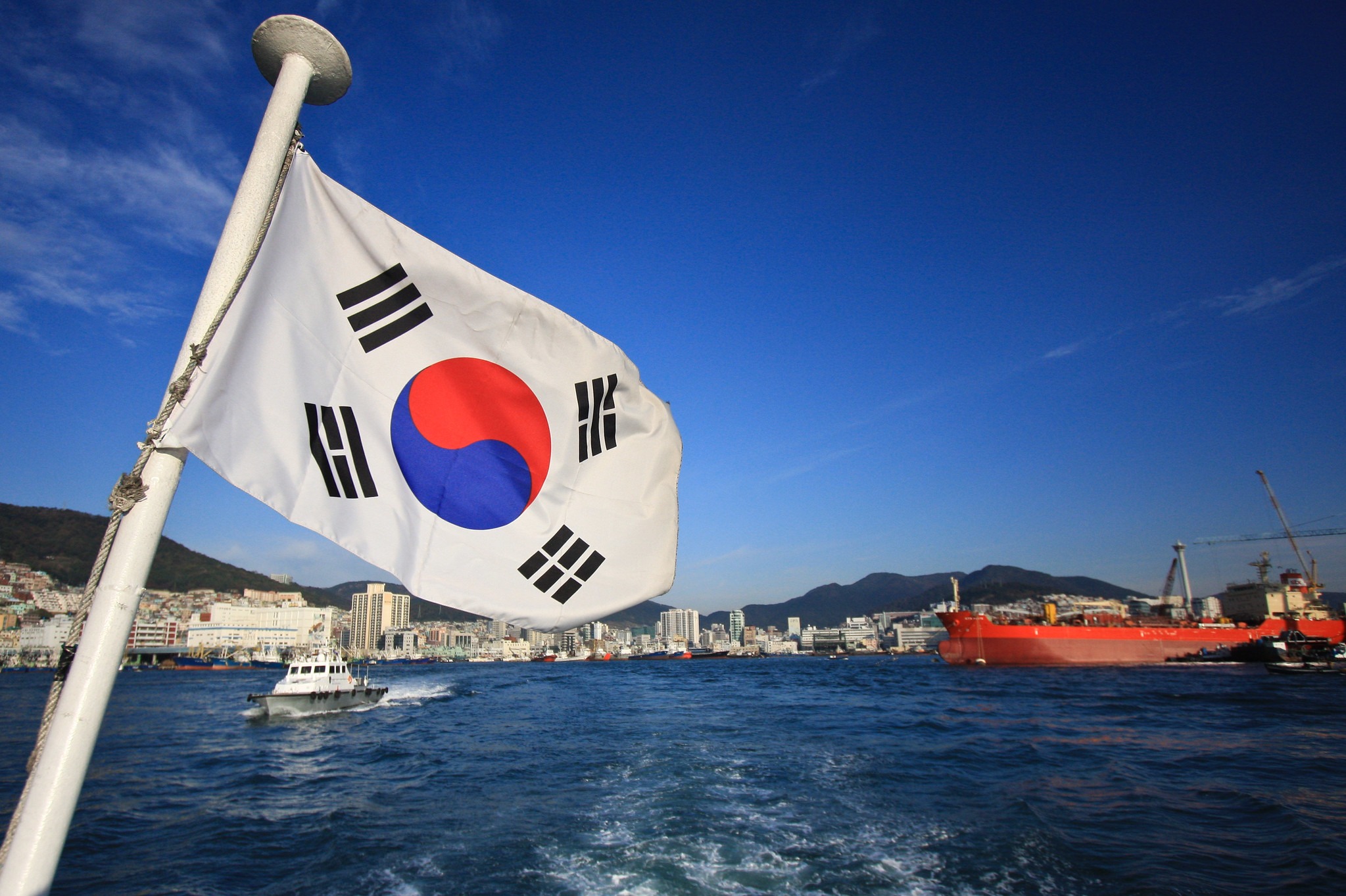
Image: Busan, South Korea (Flickr)