
Maritime Cooperation between Non-Major Power Stakeholders in the South China Sea: Japan's capability and limitations
This is the second chapter of the edited volume External Stakeholders in the South China Sea.
Download the full volume (PDF)
Kyoko Hatakeyama explores Japan’s assessment of the South China Sea dispute and the measures it is taking to avert further escalation. This chapter especially focuses on Japan’s limited direct military engagement in the South China Sea due to the constraints of its peace constitution. As a result, Tokyo places greater emphasis on bilateral and multilateral diplomatic efforts in the region, and this chapter examines these initiatives in detail.
Policy recommendation
Consolidate minilateral groupings. The creation of multi-layered networks in the region has been made possible largely through Japan’s initiatives. At the same time, cooperation with other middle-power states has further facilitated this networking process. Notably, Australia, alongside Japan, is a member of all the major minilateral groupings in the region, and its collaboration with Japan has been central to the deepening of these frameworks. European states have not yet been fully incorporated into these security networks. However, given their abundant financial resources, technological capabilities, and military strength, they could play a role even if they do not frequently participate in events such as joint exercises due to geographical distance. In this context, it is important that Japan continue its efforts to create and consolidate minilateral groupings, particularly in light of the uncertainty surrounding the durability of US commitments.
This work was supported by a generous grant from the Heinrich Böll Stiftung East Asia Office in Seoul (HBS). All views expressed are those of the authors and do not represent the official views of HBS, the Asia-Pacific Leadership Network, or its board, members, or other funders.
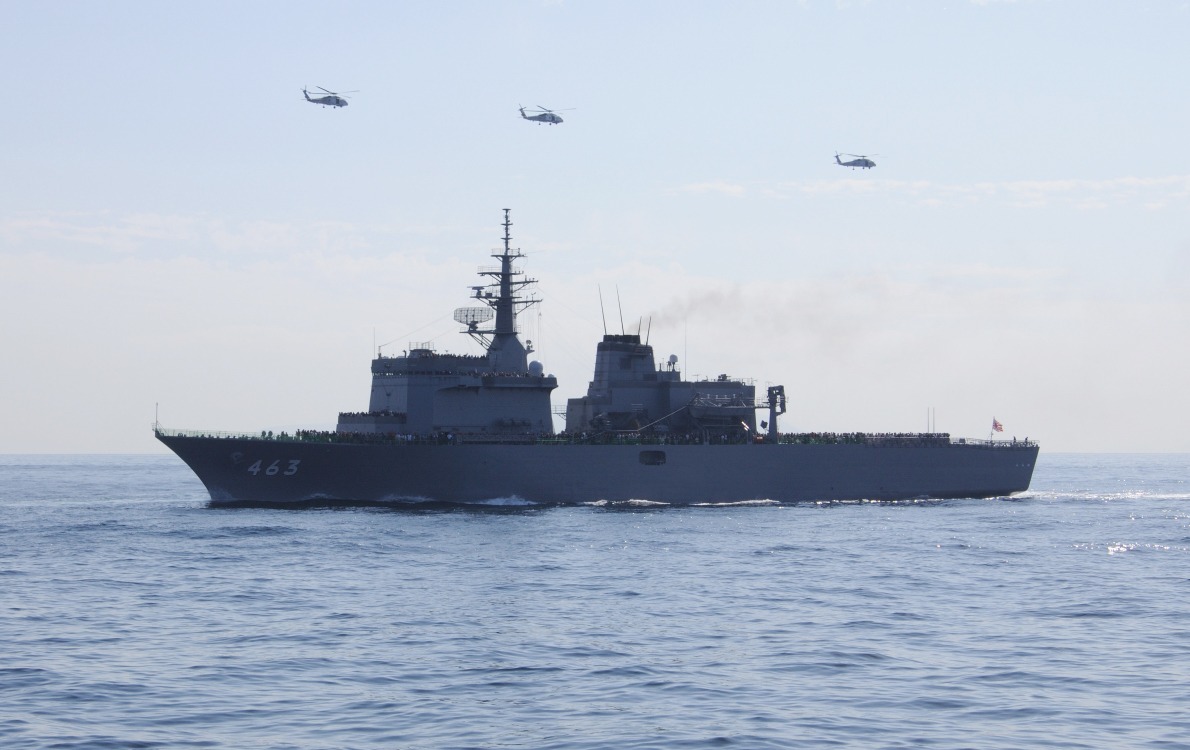
Image: JS Uraga, a ship belonging to the Japanese Maritime Self-Defense Force (US Department of Defense).