
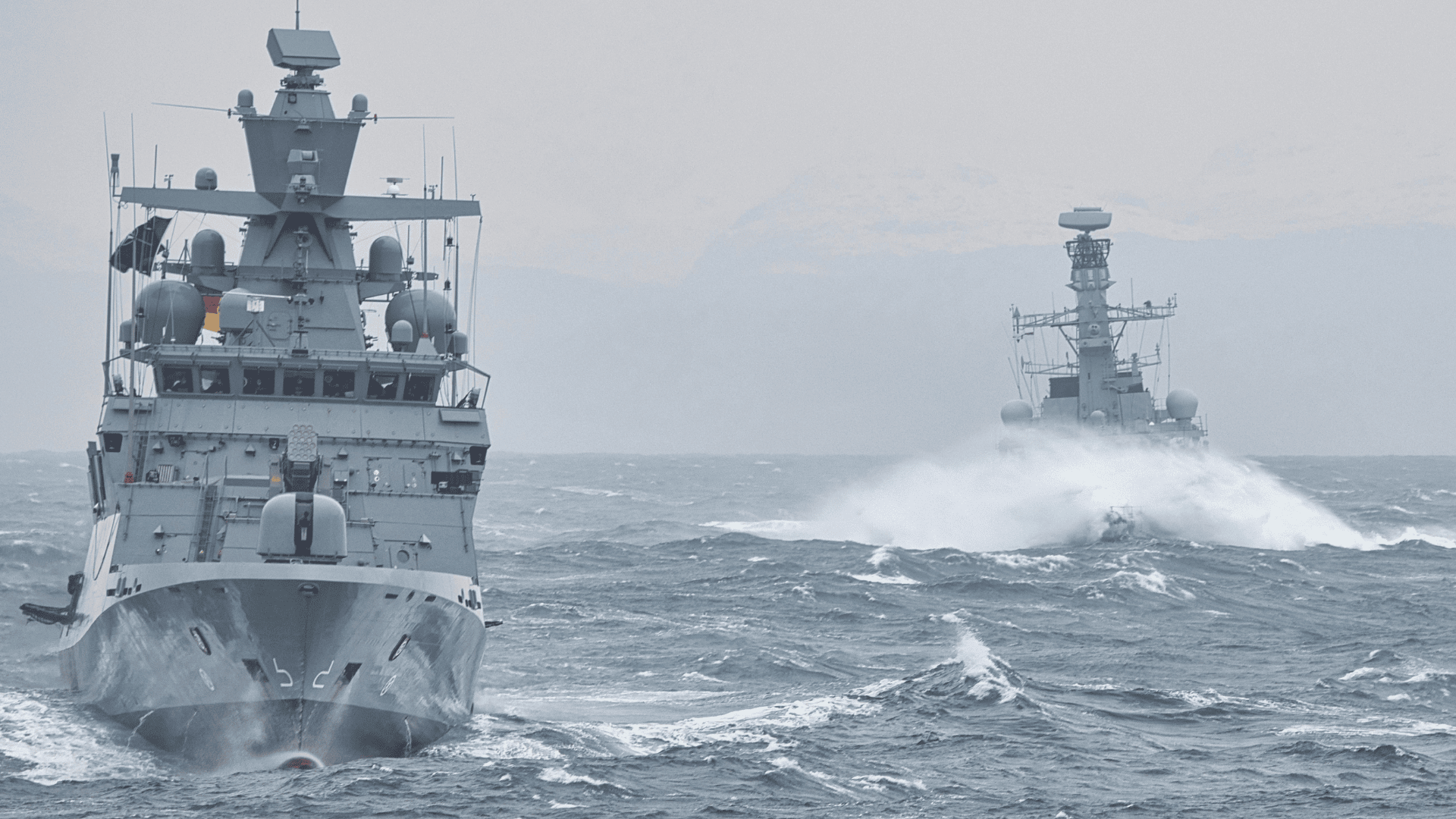
Germany and the South China Sea: Shaping the Maritime environment through limited means
This is the fourth chapter of the edited volume External Stakeholders in the South China Sea.
Maximilian Reinold discusses Germany’s perspective on the South China Sea. He finds that although Germany has no clearly articulated assessment of potential escalation scenarios in the region, it nonetheless monitors the South China Sea closely due to its heavy reliance on maritime trade traversing the area. He argues that Germany’s increased diplomatic and military engagement in the region reflects Berlin’s commitment to averting escalation in the South China Sea disputes.
Policy recommendations
Signalling together with regional and extra-regional maritime actors could be strengthened by more coordinated, mission-defined naval deployments at the EU level. Rather than relying on sporadic, nationally branded deployments, Germany could encourage regular joint or rotational operations conducted with other European navies under a common EU framework.
Naval arms and technology transfers should be considered not only through economic or industrial lenses, but also as strategic tools that can indirectly serve German interests. Germany already maintains a wide range of defense cooperation activities in the maritime domain, but these efforts often lack a clearly defined end state regarding Germany’s strategic objectives. Transfers to South China Sea littoral states could be linked to commitments to uphold freedom of navigation and maritime passage rights and obligations under UNCLOS. Framing and coordinating maritime security cooperation for these normative pillars of the regional maritime order rather than against China resonates better with littoral states’ agendas.
Germany should further advance its cooperation with regional middle-power countries that maintain a sustained naval presence in the Indo-Pacific. The security partnerships with Australia, Japan, and South Korea already connect Germany to central regional middle powers. The regional impact of these middle powers, most notably in the South China Sea, is likely to grow even further in the future. Besides additional agreements that facilitate access and logistical support for German – or European – deployments, especially joint projects in defense-industrial and technological cooperation offer a promising pathway for synergies across theaters.
This work was supported by a generous grant from the Heinrich Böll Stiftung East Asia Office in Seoul (HBS). All views expressed are those of the authors and do not represent the official views of HBS, the Asia-Pacific Leadership Network, or its board, members, or other funders.