
External Stakeholders in the South China Sea: Linking security in Asia and Europe?
This is the first chapter of the edited volume External Stakeholders in the South China Sea.
Download the full volume (PDF)
The South China Sea is a critical maritime gateway connecting both the Indo-Pacific and Euro-Atlantic regions. According to the United States Energy Information Administration, around 37 per cent of global maritime trade traversed the South China Sea as of 2023. Moreover, the region contains approximately 3.6 billion barrels of proved and probable petroleum and other liquid reserves, as well as 40.3 trillion cubic feet of natural gas. These resource estimates underscore the strategic importance of the South China Sea for regional and extra-regional countries.
Meanwhile, the South China Sea remains the site of an intense maritime dispute. Notably, China claims sovereignty over islands, features, maritime zones, and boundaries beyond those accorded by the United Nations Convention on the Law of the Sea (UNCLOS), based on the so-called ‘nine-dash line’, which it asserts reflects its historical rights. Indeed, in 2016, the UNCLOS Permanent Court of Arbitration concluded that:
China’s claims to historic rights, or other sovereign rights or jurisdiction, with respect to the maritime areas of the South China Sea encompassed by the relevant part of the ‘nine-dash line’ are contrary to the Convention and without lawful effect to the extent that they exceed the geographic and substantive limits of China’s maritime entitlements under the Convention.
Nonetheless, despite the UNCLOS Arbitral Tribunal’s conclusion, intense maritime disputes in the South China Sea persist as of the end of 2025. Beyond the conventional method of asserting maritime claims through the deployment of naval forces, China has intensified its grey-zone activities to continuously reinforce its claims in the region, further complicating the security environment. In the meantime, both regional stakeholders and external states from the Indo-Pacific and Euro-Atlantic regions have become increasingly involved in this protracted dispute. Although some middle-power countries from both regions, such as Japan, France, Germany, and the UK, are not direct stakeholders in the dispute, they continue to express concerns about stability in the South China Sea and have even deployed naval assets to the region. Meanwhile, some middle-power states, such as South Korea, display relatively limited interest in the issue. Finally, internal stakeholders such as the Philippines face a dilemma in determining the extent to which they should deepen cooperative relationships with these external actors. This demonstrates that maritime disputes in the South China Sea have already become a cross-theatre agenda item connecting the Indo-Pacific and Euro-Atlantic regions.
The essays in this volume directly address the following questions:
- How are middle-power countries, and especially those external to the region, assessing the risks of conflict escalation in the South China Sea?
- What measures they are taking to avert such escalation?
- Which opportunities might and should they explore to stabilise the region?
Indeed, because of the intensity of the South China Sea disputes and their importance to contemporary security issues, numerous studies have already been conducted on this topic. However, most of this literature focuses either on the great-power rivalry between the US and China or on the stakeholdership of the Association of Southeast Asian Nations (ASEAN) member states, rather than on how middle-power countries from both the Indo-Pacific and Euro-Atlantic regions perceive and address the South China Sea issue. For instance, Shao Yuqun examines Chinese perspectives on the South China Sea dispute and argues that China views the issue from a long-term perspective and prefers resolving the dispute bilaterally with the directly involved parties. Leszek Buszynski’s 2012 article discusses the significance of the US-China rivalry in the South China Sea and argues that the region has become a centre of great-power competition. Meanwhile, Nehginapo Kipgen’s 2018 article explores how ASEAN views the South China Sea disputes and examines potential confidence- and security-building measures (CSBMs) with China. More recently, Leszek Buszynski’s 2025 book analyses how the members of the Quadrilateral Security Dialogue have responded to the South China Sea disputes. This volume advances these existing debates on the South China Sea, while providing arguably the closest answers to the questions posed above.
Structure of this volume and overview of findings
To illustrate how countries from both the Indo-Pacific and Euro-Atlantic regions view the South China Sea disputes and approach escalation prevention in the region, this volume has invited six experts from South Korea, Japan, France, Germany, the UK, and the Philippines. The first two analyses demonstrate how South Korea and Japan view and assess the South China Sea disputes differently, despite both countries operating in geopolitical environments that rely heavily on the South China Sea’s sea lines of communication (SLOCs). The three subsequent sections examine how the major European middle-power countries – France, Germany, and the UK – each view and assess the South China Sea disputes. Lastly, the Philippines case study highlights the concerns of an internal stakeholder directly involved in the South China Sea disputes.
- The first chapter begins with Dongkeun Lee’s analysis of South Korea’s assessment of the South China Sea disputes and the measures it is taking to avert escalation. Lee finds that despite South Korea’s heavy reliance on maritime trade traversing the South China Sea, its assessment of escalation risks in the region remains quite limited, and Seoul seeks to avoid involvement in the disputes. Moreover, although some diplomatic manoeuvres were initiated during the Yoon Suk Yeol administration, South Korea has undertaken virtually no military activities in the South China Sea compared to other countries.
- The second chapter, is authored by Kyoko Hatakeyama, and explores Japan’s assessment of the South China Sea dispute and the measures it is taking to avert further escalation. This chapter especially focuses on Japan’s limited direct military engagement in the South China Sea due to the constraints of its peace constitution. As a result, Tokyo places greater emphasis on bilateral and multilateral diplomatic efforts in the region, and her chapter examines these initiatives in detail.
- Benjamin Blandin next contributes a French perspective on potential escalation in the South China Sea and the measures France is taking to stabilise the region. He highlights that France is a resident power in the Indo-Pacific, which distinguishes it from other European countries. However, Blandin finds that France views China’s rejection of the 2016 UNCLOS Arbitral Tribunal ruling very pessimistically and therefore relies on military presence and diplomacy as key tools to avert escalation in the South China Sea disputes.
- The fourth case study, provided by Maximilian Reinold, discusses Germany’s perspective on the South China Sea. He finds that although Germany has no clearly articulated assessment of potential escalation scenarios in the region, it nonetheless monitors the South China Sea closely due to its heavy reliance on maritime trade traversing the area. He argues that Germany’s increased diplomatic and military engagement in the region reflects Berlin’s commitment to averting escalation in the South China Sea disputes.
- Scott Edwards next investigates the UK’s position on the South China Sea disputes. His findings suggest that similar to France and Germany, the UK’s assessment of escalation risks in the region is quite pessimistic. Mirroring the analyses by Blandin and Reinold, Edwards also discusses how the UK has increased its diplomatic and military presence in the South China Sea to help avert escalation. Meanwhile, he highlights the UK’s contribution to the development of maritime domain awareness (MDA), which is crucial for ASEAN countries given their limited resources and the complex maritime geography of the South China Sea.
- The final section, written by Dianne Despi, discusses the Philippines’ view of the South China Sea disputes, representing the perspective of an internal stakeholder. She notes that “conflict escalation is possible, but not inevitable” from the Philippine point of view, given its direct stake in the South China Sea. She further highlights that different Philippine government agencies have their own assessments of potential escalation scenarios in the region. To avert escalation, Despi points to increased investment in the Philippine Coast Guard and the government’s diplomatic initiatives. Meanwhile, she underscores that steady capability development remains a priority for Manila’s efforts to prevent escalation.
Policy recommendations
Several different recommendations are proposed by the contributors, and these vary depending on each country’s context. However, the recommendations below represent the items that are broadly agreed upon amongst the contributors to this volume.
The objectives of cooperation in the South China Sea should focus on stabilising the maritime order in the region, with an emphasis on upholding the rules-based international order. Given that the South China Sea is a crucial maritime gateway, and that external middle-power countries rely heavily on the free flow of maritime trade through the region, they need to cooperate with internal stakeholders to preserve the norms of the existing maritime order, such as freedom of navigation and the peaceful resolution of disputes. This requires continued commitment to UNCLOS, the principal body of international maritime law.
CSBMs are essential for the peaceful resolution of disputes. In particular, internal stakeholders in the South China Sea have called for renewed momentum in the negotiations on the Code of Conduct (CoC). External middle-power states can support these efforts by providing maritime law training and diplomatic assistance to help advance CoC negotiations in various forums, including the East Asia Summit. This suggests that continued engagement in multilateral forums remains critical to CSBM building, despite China’s attempts to resolve maritime disputes in the South China Sea through bilateral channels. Existing multilateral forums, including ASEAN, therefore remain central to this process, and external countries should promote multilateral engagement to strengthen CSBMs in the region.
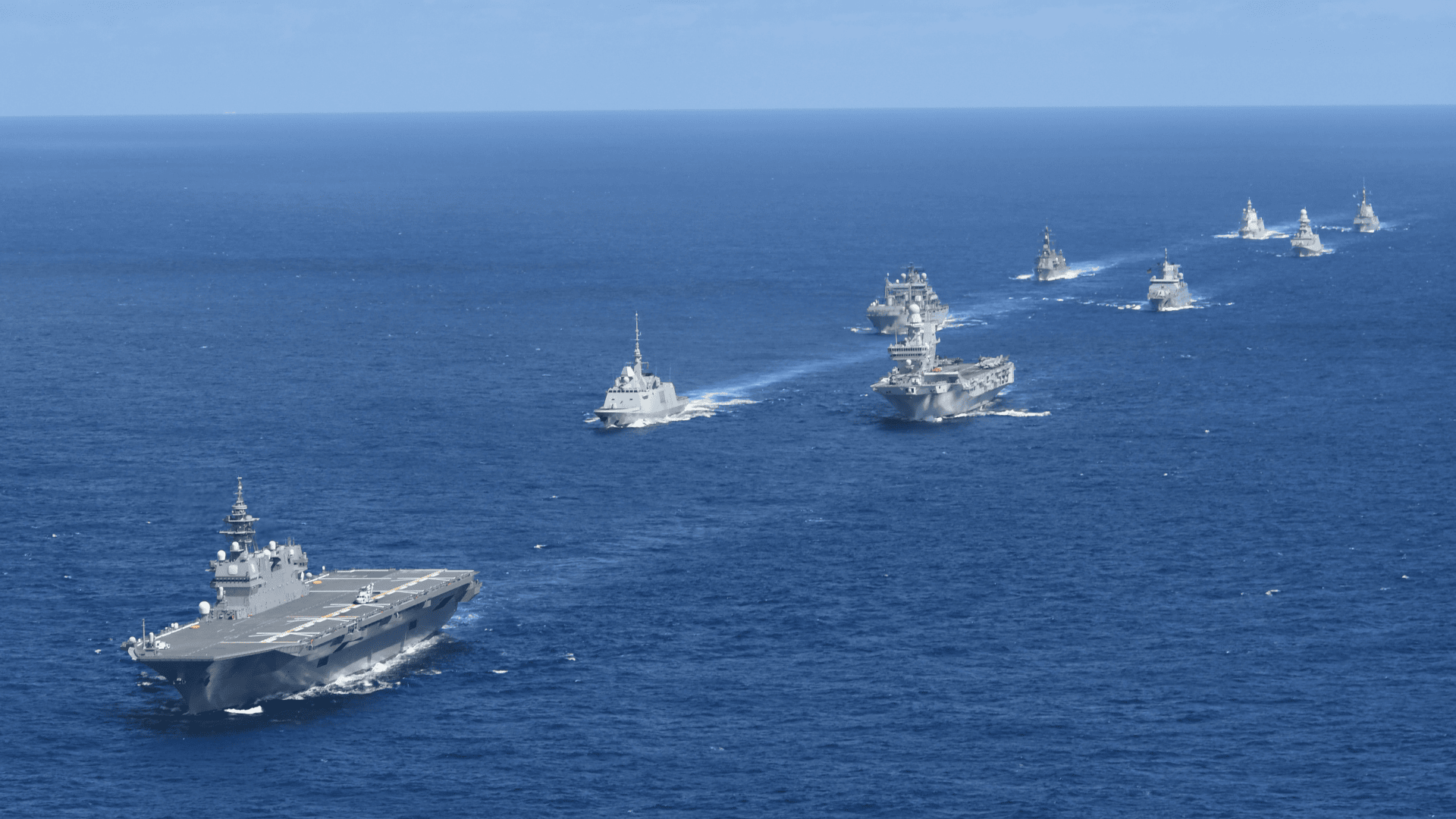
There needs to be continued and expanded naval presence by external middle-power countries. Except for South Korea, the external middle-power states examined in this volume – Japan, France, Germany, and the UK – have continued to deploy naval assets to the South China Sea. These deployments signal to China that these countries are monitoring the region’s risk of conflict escalation closely, and that Beijing will face substantial resistance if it attempts to change the status quo through the use of military force. Although South Korea is not part of this architecture yet, its heavy reliance on the South China Sea’s SLOCs suggests that Seoul should consider increasing its naval presence in the region as well.
The Philippines views capability building as a priority in its efforts to avert escalation, and the external middle-power states have the capacity to help meet this need. South Korea and Germany are identified as major weapons exporters and suppliers to South China Sea littoral states, which means that, in partnership with internal stakeholders, they could make substantial contributions to these countries’ capability development. The existing defence industrial development programmes of France and the UK could also contribute meaningfully to the capability-building efforts of internal stakeholders in the South China Sea disputes, including the Philippines. However, policymakers should note that such efforts may lead to an arms race within the region and that deterrence stability should be paired with diplomatic measures.
There is substantial demand for improved maritime domain awareness (MDA) systems, and external middle-power states can cooperate with internal stakeholders to develop these capabilities. Given the increase in China’s grey-zone activities, it is crucial for other South China Sea stakeholders to possess adequate capabilities to detect and identify such actions. MDA is particularly valuable in this context, as the region’s geographic environment is predominantly maritime. However, internal stakeholders often lack the resources needed to develop robust MDA capabilities, creating an opportunity for external middle-power states to cooperate and contribute to the stabilisation of the region.
This work was supported by a generous grant from the Heinrich Böll Stiftung East Asia Office in Seoul (HBS). All views expressed are those of the authors and do not represent the official views of HBS, the Asia-Pacific Leadership Network, or its board, members, or other funders.
Image: