The Role of SCO and BRICS in Asian Stability from the Chinese Perspective
EXECUTIVE SUMMARY
As the world enters a new period of turbulence and transformation, China’s comprehensive approach to coordinating development and security has attracted widespread attention. Within China’s security concept, development and security are two sides of the same coin. As China’s two primary multilateral mechanisms, the Shanghai Cooperation Organization (SCO) and BRICS play vital roles in regional security and economic growth, serving as key platforms for this strategic thinking. Specifically, the SCO functions as a regional stabiliser by institutionalising cooperation, maintaining geopolitical stability, and exploring security models outside traditional military alliances. Conversely, as a structural stabiliser, BRICS anchors the economic realm, stabilising the global economy, balancing global governance, and supporting multilateralism. Despite long-term internal differences rooted in their structural attributes as ‘heterogeneous coalitions’, both organisations are poised for greater global influence. Looking ahead, the SCO will transition from a security platform to a comprehensive governance framework with a stronger economic focus and mature internal balancing mechanisms. Meanwhile, BRICS will upgrade into a core of coordination for the Global South, deepening financial, monetary, and non-traditional security cooperation among its member states.
ABOUT THE AUTHOR
Dr. Tianjiao Jiang is Associate Professor at Development Institute of Fudan University. He also serves as deputy director of Center for BRICS Studies and research fellow of Center for Global AI Innovative Governance at Fudan. His research focuses on emerging technologies, international security and BRICS cooperation. He has published 4 books and more than 40 academic papers in the Journal of Chinese Political Science, Asian Perspective, Chinese Political Science Review, Copenhagen Journal of Asian Studies, etc. Dr. Jiang is member of China Arms Control and Disarmament Association, ACONA fellow of Davis Center for Russian and Eurasian Studies at Harvard University (2021-2022), and visiting scholar at Paul Tsai China Center of Yale Law School (2026). He is frequently interviewed by media outlets such as The New York Times, the South China Morning Post, and Le Monde, and has participated as an expert in P5 Young Professional Network and several Track II dialogues on Sino-US strategic stability.
The opinions articulated above represent the views of the authors and do not necessarily reflect the position of the Asia-Pacific Leadership Network or any of its members. The APLN website is a source of authoritative research and analysis and serves as a platform for debate and discussion among our senior network members, experts and practitioners, as well as the next generation of policymakers, analysts and advocates. Comments and responses can be emailed to apln@apln.network.
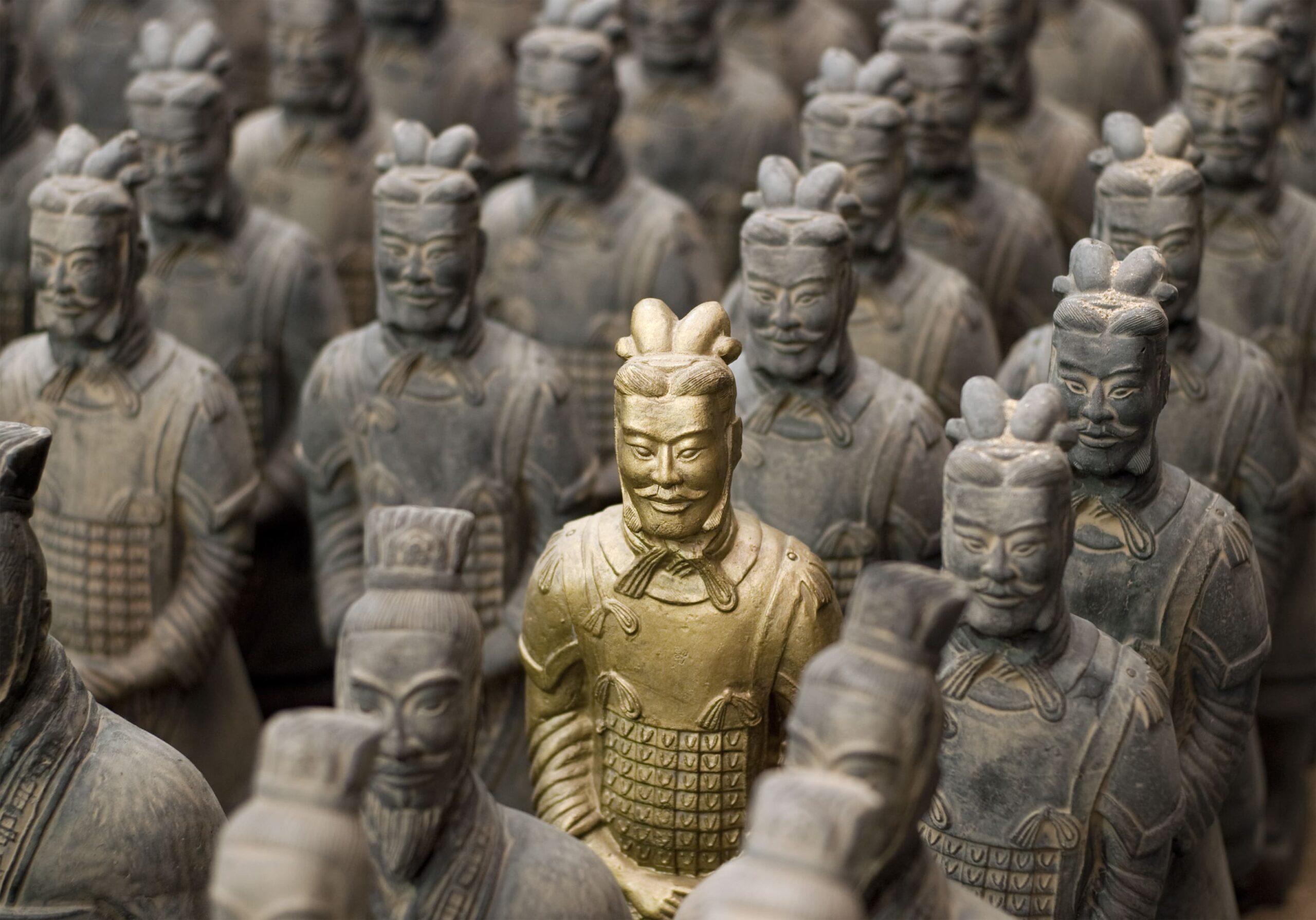
Image: A gold-painted replica Terracotta Warrior among many unpainted examples near Xi’an in Shaanxi province, China. George Clerk/Getty Images.