
Does the US deserve allies’ trust?
HANKYOREH
APLN Vice Chair Chung-in Moon wrote in his column for Hankyoreh that US deterrence alone is insufficient to reassure its Asian allies and called for greater US credibility through preventive diplomacy and confidence-building measures that address their distinct security concerns.
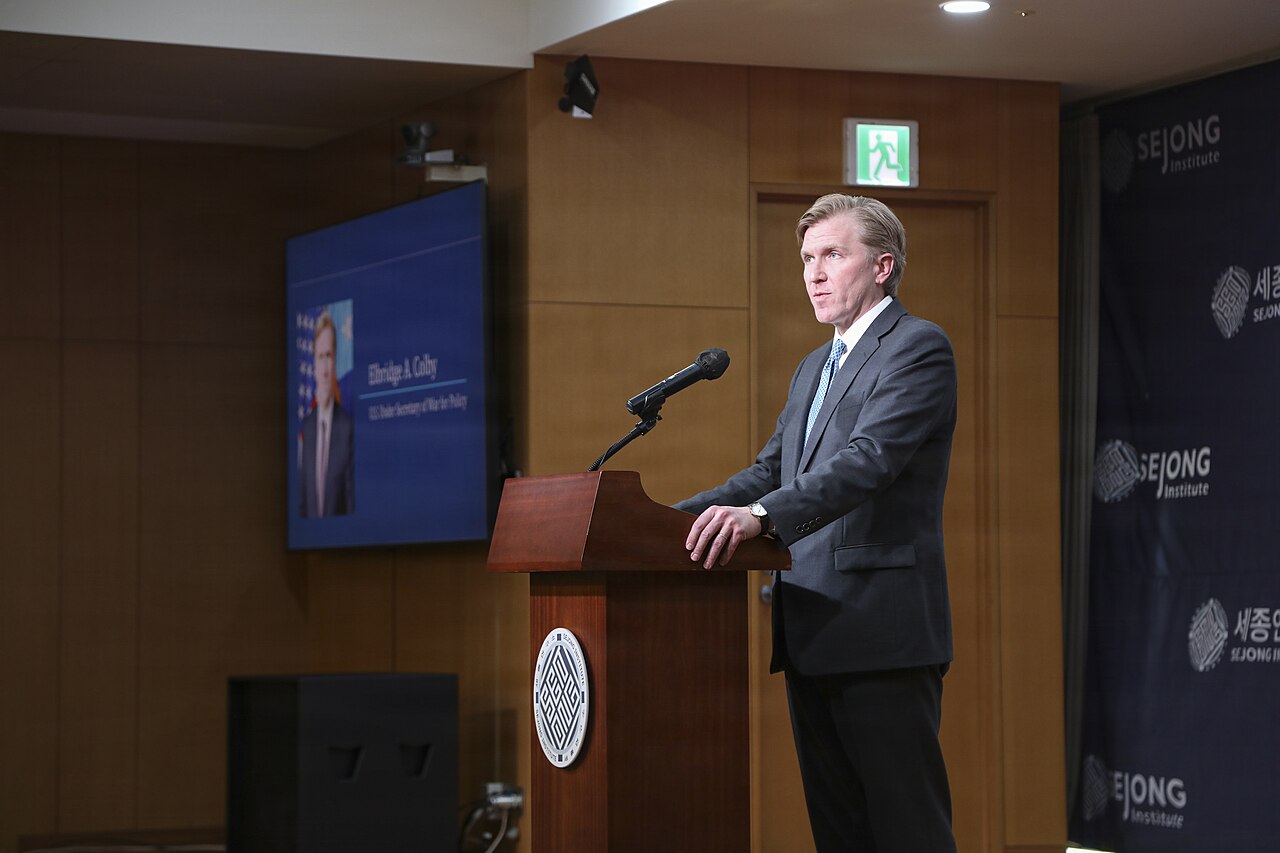
“We see Asia as of paramount importance,” Elbridge Colby, the US undersecretary of defense for policy, said in a speech at the Manila-based Stratbase Institute on Aug. 10.
“America is definitely not disengaging from Asia — to the contrary,” he said. “Our driving and abiding purpose is to maintain a favorable balance of power in the Indo-Pacific. [. . .] This requires us to maintain a posture of deterrence by denial along the first island chain.”
In effect, Colby was reaffirming the US’ basic strategy of blocking China from advancing into the western Pacific.
In Colby’s telling, it’s a serious error to regard the US as “too unreliable to work with anymore.” Rather, he said, the Trump administration has adopted a flexible and realistic “approach defined by common sense.”
When it comes to defense, “countries can no longer take America for granted,” and America’s allies and partners in the area are expected to assume their fair share of the burden of common defense.
Colby described recent talk about building a middle power alliance excluding the US as a “fashionable but superficial idea.” True deterrence, he said, derives from “fielded hard power and the demonstrated political will to use it,” with the implication that only the US has those to offer.
During a fireside chat in the Deterrence Symposium held in Omaha, Nebraska, on Aug. 5 by the US Strategic Command, Colby reportedly stressed three aspects of the US’ nuclear strategy.
Read the full article on the Hankyoreh website here.
Image: Wikimedia Commons
.jpg)