Time for Strategic Dialogue on Great Power Threats to Peace and Security
The system of peace and security established under the U.N. Charter is now facing its most serious crisis since the end of World War II.
This crisis has been precipitated by the war against Iran initiated by the United States and Israel. While the Iranian authorities’ domestic suppression of their own people remains indefensible, such actions provide absolutely no legal justification for military attack by external powers. Article 2.4 of the U.N. Charter prohibits the use of force as a general rule, allowing exceptions only in cases of self-defense and when authorized by the U.N. Security Council.
The use of force against Iran falls under neither of these categories. Although some scholars argue that preemptive self-defense strikes may be permissible in the face of an “imminent threat,” the definition of “imminence” remains highly contested. We must not allow the misuse of the concept of self-defense based solely on the subjective perceptions of individual leaders, including that of U.S. President Donald Trump.
Since the beginning of the second Trump administration, the United States has repeatedly engaged in military actions that contravene international law, including its intervention in Venezuela. In 2022, the international community united against Russia’s invasion of Ukraine, declaring that “changing the status quo by force is unacceptable,” with the U.S. leading this effort.
Today, however, the U.S. has pivoted to the opposite extreme, demonstrating imperialistic ambitions and exercising rule by force with blatant disregard of international law. In doing so, it weakens its ability to restrain other major powers, such as China and Russia, from acting in a similar manner. The result is a looming global moral hazard, threatening a chain reaction that could dismantle the international order entirely.
At the same time, attention must be directed to the magnitude of the human rights violations committed by Israel, a key ally of the United States. The military offensive in Gaza, which began in October 2023, has resulted in more than 75,000 casualties, many of whom are women and children. These grave human rights violations have been characterized as genocide, the most serious crime under international law in human history, drawing lessons from the tragedy of the Holocaust during World War II.
Both U.N. Special Rapporteur Francesca Albanese and the U.N. Commission of Inquiry, led by Navi Pillay, have concluded that acts of genocide have been perpetrated by Israel in Gaza. Furthermore, the International Criminal Court (ICC) has issued arrest warrants for Prime Minister Benjamin Netanyahu on charges of war crimes and crimes against humanity. Despite these findings, the United States continues to provide massive military aid to Israel and has sanctioned Albanese as well as ICC judges and prosecutors, undermining international justice. Such actions amount to support for and complicity in grave human rights violations in Gaza. Even more alarming is the escalation of joint military operations in the Middle East, which could significantly heighten the risk of a wider regional conflict, or even a WWIII.
In light of these developments, how should the world — and the Asia-Pacific region in particular — respond?
First, all nations should pursue every diplomatic effort to prevent further escalation. Second, as the prerequisite to the former, all nations should clearly affirm that the war against Iran is illegal and must not be supported, and should refrain from providing any material support, including the denial of military base access, thereby diplomatically and logistically isolating any attempts to wage this illegal war. Third, there is an urgent need to establish strategic cooperation across the international community to address the current crisis over the longer term.
The ongoing situation has exposed the inherent hypocrisy of the post-war U.N. system, where the five permanent members (P5) of the Security Council retain the privilege of exercising their veto power over any collective U.N. action, while being allowed to possess nuclear weapons with the capacity to threaten global stability. As a result, the P5 and their allies are effectively granted immunity from any violation of international law. It is necessary to challenge this structural inequality. This is precisely why — regardless of whether they are labelled “middle powers” or not — countries beyond the superpowers must strengthen cooperation to rebuild a more just and rules-based international order.
Yet the reality is that many countries find it difficult to speak out, due to their excessive dependence on economic and military ties with the United States. A notorious example of this subservience to the U.S. was Japanese Prime Minister Sanae Takaichi’s remark that “only Donald can bring peace to the world.” While dispatching the Self-Defense Forces to the war in Iran is not a viable option for the time being due to constitutional constraints, the space to refuse cooperation, no matter how lawless a war waged by a sole ally, will narrow significantly once these constraints are removed. Many Japanese, including the younger generation, are already actively expressing their opposition to such a trajectory.
To break the deadlock, countries must pivot away from an overreliance on bilateral relations with the United States, and instead strengthen multilateral diplomatic, economic and security frameworks. In Europe, leaders are often better positioned to speak out against war or reject the use of military bases because they are protected by the strong economic integration of the European Union (EU). The risks associated with overdependence on bilateral ties with the United States are higher than ever. Japan and South Korea, in particular, should deepen their mutual cooperation while broadening economic and strategic partnerships with the Association of Southeast Asian Nations, India, Australia, New Zealand, Canada, South American countries and the EU. Such efforts could lay the groundwork for a more resilient form of regional collective security that is not wholly dependent on the United States. It is time to start a strategic discussion on building a dense network of multilateral diplomacy and standing together to confront any superpower that threatens global peace and security.
About the Author
Kazuko Ito is a Tokyo-based human rights lawyer and a lecturer at the Keio University Law school. She is one of the founding members and vice president of Human Rights Now, a Tokyo-based international human rights NGO with UN consultative status, awarded Okinawa Peace Prize in 2024. As the first international human rights NGO based in Japan, Human Rights Now works for the promotion and protection of human rights worldwide, with a special focus in Asia using a variety of techniques including investigation, grass-roots empowerment for human rights defenders, solidarity action, and advocacy.
Disclaimer: The opinions articulated above represent the views of the author(s) and do not necessarily reflect the position of the Asia-Pacific Leadership Network or any of its members. APLN’s website is a source of authoritative research and analysis and serves as a platform for debate and discussion among our senior network members, experts, and practitioners, as well as the next generation of policymakers, analysts, and advocates. Comments and responses can be emailed to apln@apln.network.
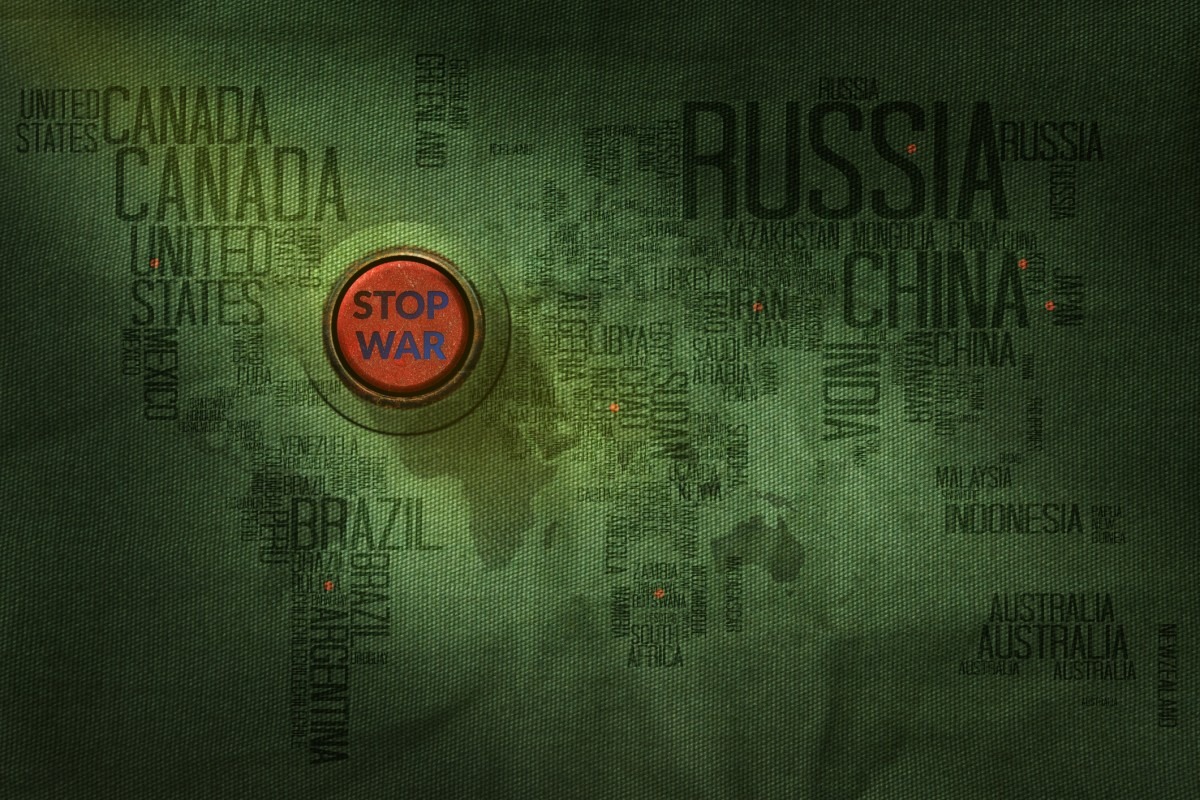
Image: BlackSalmon/iStock photos.
This article was published in The Korea Times on 02 April 2026. You can find the original article here.