APLN Quarterly Nuclear Memo (January - April 2026)
Download the APLN Quarterly Nuclear Memo
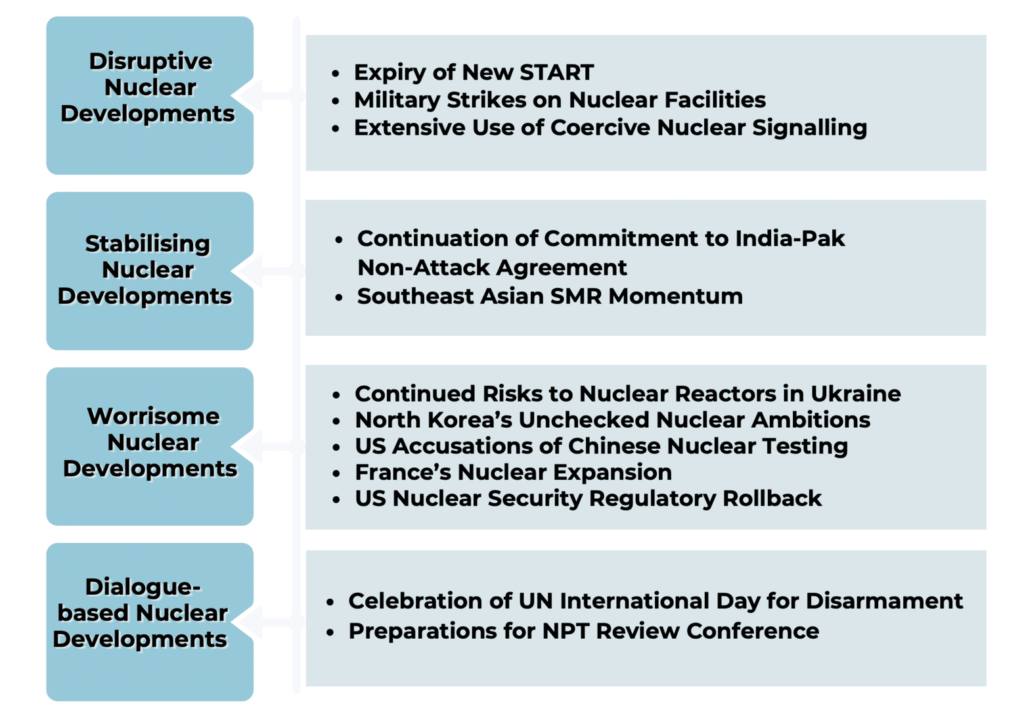
As part of APLN’s 2026-2030 Research Strategy, we are delighted to launch a new publication, the APLN Quarterly Nuclear Memo. The document tracks, analyses and summarises nuclear developments shaping the Asia-Pacific security environment. These are grouped into four categories:
- Disruptive (developments posing acute or immediate risks to the nuclear order and regional stability),
- Stabilising (steps that reduce risk or build confidence),
- Worrisome (trends that, if unchecked, could worsen the nuclear order),
- Dialogue-based (activities that involve two or more interlocutors).
Key developments to monitor in the coming quarter include the outcome of the NPT Review Conference and its implications for Asia-Pacific non- proliferation diplomacy; the trajectory of the Iran conflict and resolution of its nuclear issue; further DPRK naval nuclear developments, including possible SLBM testing; the ROK’s pursuit of enrichment and reprocessing capabilities, as well as nuclear submarines; AUKUS submarine programme milestones; and movement on trilateral US-Russia-China arms control discussions. We will keep a close watch on these developments and more.
About the APLN Quarterly Nuclear Memo
This analysis was prepared by APLN Senior Research Adviser Manpreet Sethi. The APLN Quarterly Nuclear Memo is a cross-cutting initiative of the Asia-Pacific Leadership Network’s 2026–2030 Research Strategy. This inaugural issue covers January to April 2026; future editions will follow a standard quarterly cycle. For questions or to suggest developments for future issues, contact the APLN Secretariat at apln@apln.network. We would sincerely appreciate your feedback or suggestions.
The opinions articulated above represent the views of the authors and do not necessarily reflect the position of the Asia-Pacific Leadership Network or any of its members. The APLN website is a source of authoritative research and analysis and serves as a platform for debate and discussion among our senior network members, experts and practitioners, as well as the next generation of policymakers, analysts and advocates.
Image: iStock/cherezoff